


Shawscope Collection Volume 4 Complete Blu-ray Review


Arrow Video
Blu-ray Release: December 9, 2025
Video: 2.35:1 or 1.85:1/1080p/Color
Audio: Mandarin, Cantonese, and English LPCM 1.0 Mono (not every film includes all three options); English DTS-HD Master Audio 5.1 (Super Inframan only)
Subtitles: English, English SDH
Run Times: Various
Directors: Hua Shan, Ho Meng-hua, Pao Hsueh-li, Kuei Chih-hung, Chor Yuen, Hua Shan, Lau Kar-wing, Yang Chuen, Alex Cheung
From slimy creatures to supernatural wizardry to sex-crazed serial killers, the biggest collection in Arrow Video's Shawscope series yet. (From Arrow's official synopsis)
Disc 1:
Super Inframan (1975)
Disc 2:
The Oily Maniac (1976)

Battle Wizard (1977)
Shirking his responsibilities, prince Duan Yu (Danny Lee) goes on a magical journey where he meets a snake-charming girl, fights monsters, and falls in love with a ninja princess, who might also be his lost half-sister.
You’ve seen Danny Lee as a cyborg superhero (Super Inframan) and as a monstrous antihero (The Oily Maniac), so why not watch him as a pacifist future Emperor who stumbles his way into magical laser beam powers in the genre hodgepodge known as Battle Wizard? Set against a fairytale backdrop and blending classic wuxia melodrama with fantastical special effects, hero’s journey tropes, graphic violence, and a strange sense of humor, Battle Wizard is a classic case of quantity winning out over quality. It isn’t the best at doing any one thing, but it does so many things that it’s very entertaining.
Cinematographer-turned-director Pao Hsueh-li doesn’t have the same instant name recognition of Chang Cheh, Lau Kar-leung, or Chor Yuen, but he made some of the studio’s greatest films, including a one year stretch in 1972 that included classics The Boxer from Shantung, The Water Margin, and The Delightful Forest. The imaginative, often wire-assisted fight coordination is credited to veterans Chia Tang and Huang Pei-Chi, but I suspect it was a big group effort, because the supporting cast includes the likes of Brandy, Wah, and Cheung-yan of the Yuen Clan, as well as choreographer and future director Corey Yuen (no relation). That’s a lot of pedigree in one picture.
Ni Kuang’s script is the first of several film, television, and video game adaptations of Louis Cha's (aka: Jun Yong) wuxia novel Demi-Gods and Semi-Devils (serialized, 1963-’66). The most recent adaptation was the 2023 film Sakra, which was co-directed, co-choreographed, and co-produced by star Donnie Yen.


Video
Battle Wizard didn’t make it to US VHS or Beta, but it did get a North American DVD debut from Well Go in 2009. The first Blu-rays were importable from Germany and Austria (via filmART and Shock Entertainment), but those were both slightly cut, due to damage. Arrow’s 2K remaster improves on the Celestial Films streaming HD transfer with superior texture, cleaner blacks, and less digital tinkering. The cartoonishly colorful special effects also pop nicely against the moodier backdrops. Note that there is some kind of artifacting that dances around the right edge of the frame during the climax. I’m not sure if this is damage to the negative or the result of double exposure special effects.
Audio
The Mandarin and English soundtracks are similar in tone and clarity. The Mandarin dub has a slight volume advantage, while the English dub sounds a tiny bit clearer. Frankie Chan’s title themes are among the more memorable original Shaw cues and fit neatly alongside the cues borrowed from the De Wolfe library (including at least one that can be heard in Dawn of the Dead [1978]).
Extras
Commentary with Jonathan Clements – The author of A Brief History of the Martial Arts: East Asian Fighting Styles, from Kung Fu to Ninjutsu (Little, Brown Book Group, 2025) explores the work of author Louis Cha, differences between Battle Wizard and Demi-Gods and Semi-Devils, the wider careers of the cast & crew, historical/cultural references throughout the film, and other Hong Kong fantasy movies (from Shaw and other studios).
Disc 3:
Black Magic (1974) and Black Magic Part 2 (1976)
Disc 4:
Hex (1980)
Bewitched (1981)
Disc 5:

Hex vs. Witchcraft (1980)
A compulsive gambler and born loser tries to settle his debts by prostituting out his wife, who leaves him. After several unsuccessful attempts at suicide, he stumbles into an arranged marriage with a ghost. Hijinks ensue.
Kuei Chih-Hung’s Hex was a hit and practically redefined his tenure at Shaw Bros. He followed it up with increasingly wacky, energetic, stylish, and gross horror movies, like Bewitched and The Boxer’s Omen (1983). Unexpectedly, the films that actually used the Hex title, Hex vs. Witchcraft and Hex After Hex (1982), ended up being in-name-only comedies. I hadn’t seen either ‘sequel’ before this review and, given that Hex’s chief weakness was the comic relief shoehorned into its saggy middle section, I was concerned to say the least.
Hex vs. Witchcraft maintains some of its predecessors’ hex horror theming, but buries it beneath scatalogical humor, goofball horniness, dance breaks, and general listlessness. The protagonist’s failed attempts at suicide are somewhat amusing (I kind of liked the dance breaks, too, if I’m honest), but, set against a stream of deeply unamusing gags, it only ends up highlighting the film’s raggedy, episodic structure and lack of editing. It takes about 40 minutes to even introduce a supernatural element and the film carries on for another hour after that, reiterating the same joke over and over, before finally reconnecting with the gambling plot with only about 20 minutes to go. Fortunately, Kuei’s direction is creative and dynamic throughout and springs to life whenever something spooky happens.



Hex After Hex (1982)
Following a fatal car accident, a lonely ghost possesses the body of a young woman in order to seduce a bodybuilding movie stuntman.
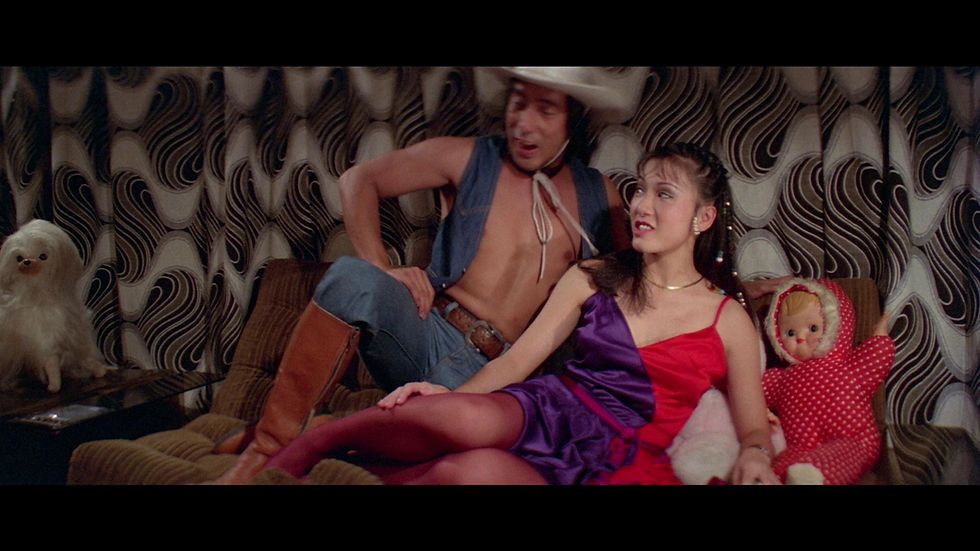
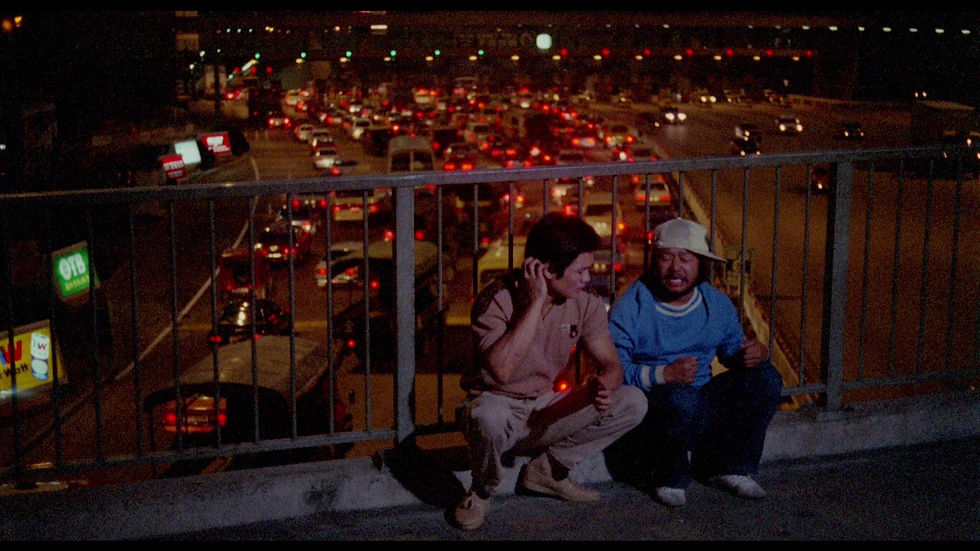
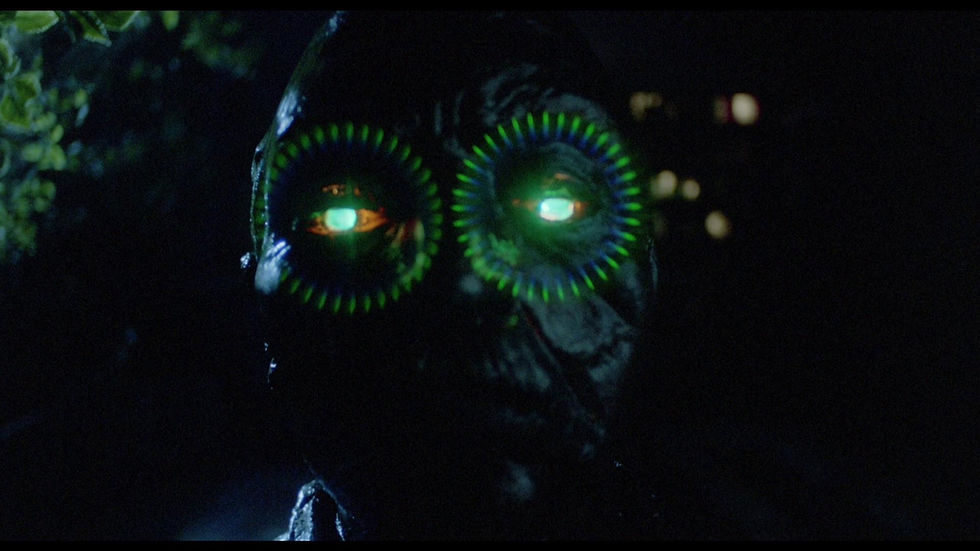
Hex vs. Witchcraft was followed by another Hex, Hex After Hex, which was an actual sequel this time, rather than an in-name-only follow-up. Whereas Hex vs. Witchcraft riffs episodically on a theme, Hex After Hex is a truly anarchic stew of random shit, spoofing everything from its predecessor and the Peking opera to western consumer fads, the Hong Kong film industry, and Star Wars. The Star Wars angle is probably the element most viewers talk about, though these references are brief. Specifically, the ghost takes the form of Yoda (via a store-bought Halloween mask) and, later, Darth Vader, complete with the scuba breathing effect, John Williams’ “Imperial March,” and a green lightsaber that destroys clothing.
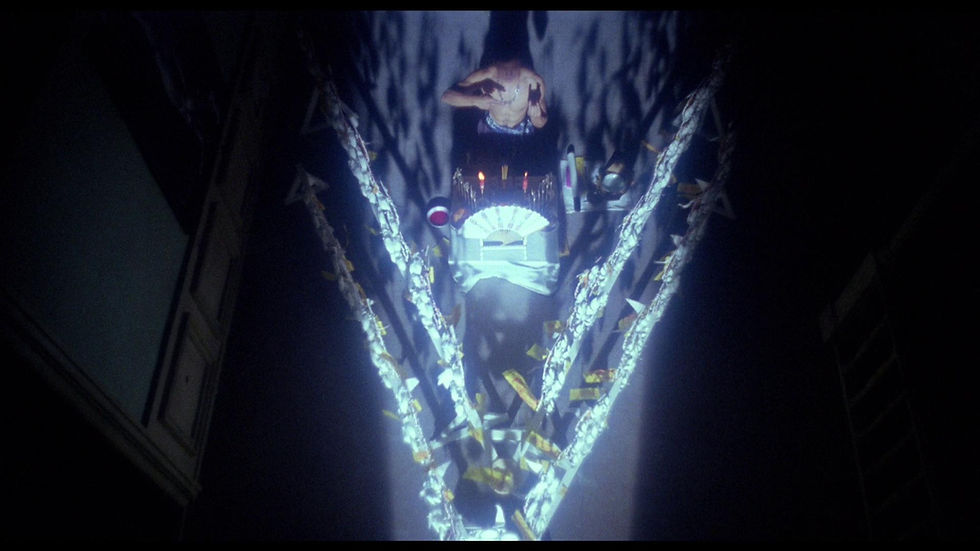
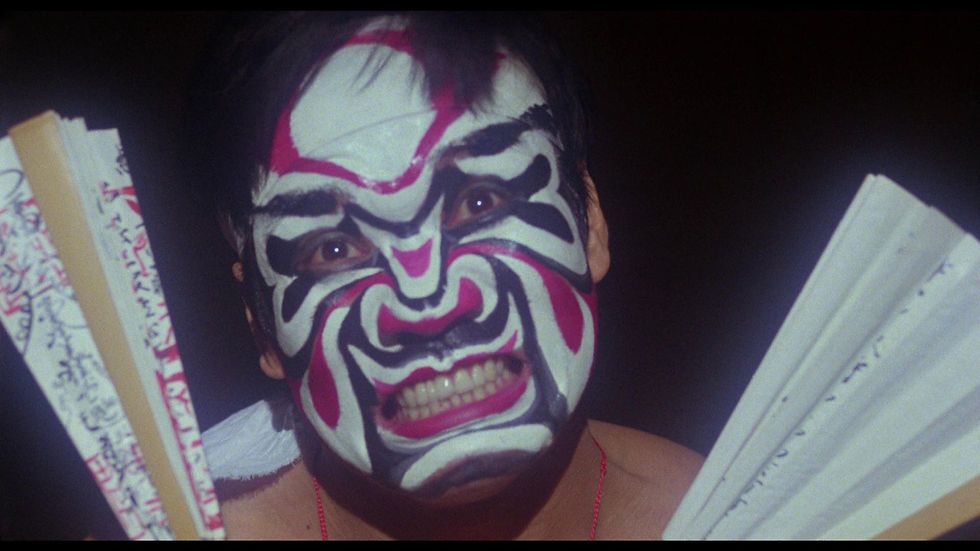
It’s impossible to appraise Hex After Hex’s actual quality, because it’s so noisy, unfocused, and, at times, excruciatingly unfunny, yet it does unleash Kuei’s id in a way the previous film doesn’t. Here, you get chaotic absurdity, swift camera moves, and stylish lighting alongside a direct confrontation of the Hong Kong class divide. Instead of reflecting the dark realities of inequality, like The Killer Snakes (1974) or The Killer Constable (1980) did, Kuei and writer On Szetso satirize politics in a Monty Python-esque fashion. The third act tries harder to tie the film to Hex and Bewitched with a couple of over-the-top supernatural rituals, though, weirdly, a lot of the film is actually structured like a sitcom, rather than a horror film or sex comedy. Regardless, it’s hard to hate any movie that ends with a giant bronze statue of Lenin coming to life, fighting Venom Mob veteran Lo Mang, and spewing gold coins like a slot machine.


Video
Hex vs. Witchcraft and Hex After Hex are among some of the rarest films in this collection. Neither had official US video releases on any format and could only be imported on R3 HK DVDs from Intercontinental Video. These are, like Bewitched, comparatively raw-looking films. Coupled with the fact that they weren’t previously available, I was expecting rough transfers, but these 2K scans more or less match the overall quality of the set, aside from minor negative damage and artifacts from diffused lighting effects. Note that Hex After Hex is 1.85:1, not “Shawscope” 2.35:1, like Hex After Hex.
Audio
Both films have Cantonese and Mandarin dub options, and utilize dopey comedic scores that would have seemed outdated even at the time, aside from a heavily used electronic dance track that I was unable to identify. Hex After Hex has the more annoying music, but also features more original compositions, so it’s kind of a wash.
Extras
Additional Mandarin voiceover clip (0:44, HD) – During the restoration of Hex vs. Witchcraft, Arrow was left with a single audio track that didn’t correspond to any of the film footage.
Disc 6:

Bat without Wings (1981)
A notorious murderer known as The Bat without Wings seemingly returns from the dead and kidnaps a young woman belonging to a clan of skilled swordsmen, who band together to rescue her and uncover a wider conspiracy.
Thanks to the reputations of Ho Meng-Huathe’s Black Magic and Kuei Chih-Hung’s The Boxer’s Omen, the Shaw Bros. brand of horror is often remembered as being set in the modern day, in developing East Asian countries, where the grotesque rituals of the past are supposedly still practiced. But there was a second kind of Shaw Bros. horror – the scary wuxia fantasy, as defined by other classics, like Sun Chung’s Human Lanterns (1982) and Revenge of the Corpse (1981).
Readers might be familiar with Chor Yuen’s Bat without Wings for the fact that its villain sports make-up and hair style inspired by Kiss’ Gene Simmons. The image of the Bat’s painted face was a centerpiece of its advertising campaign, but the film’s actual tone isn’t as campy as that image might imply. Though not as horror-forward as Human Lanterns, which was likely inspired by early North American slashers, it is a consistently spooky mélange of supernatural swordplay, melodrama, and Mario Bava-esque visual textures. I’d even argue that it’s a more successful confluence of European Gothic and Hong Kong action than Legend of the Seven Golden Vampires (1979), which literally combined the directorial efforts of Hammer’s Roy Ward Baker and Shaw’s most prolific director, Chang Cheh.
Yuen was a late-stage Shaw regular known for his lavish, colorful, and stagey fantasy adventures, including The Magic Blade (1976) and Clans of Intrigue (1977). Like most of his films, the plot can be a bit hard to follow for audiences not already inured in the tropes of popular wuxia literature or the writer/director’s own habit of halting the momentum while deploying flashbacks and exposition dumps. It functions like a sequel to a film that doesn’t exist, to the point that I assumed that the script was another of the many adaptations of Gu Long novels that Yuen made. Apparently, Bat without Wings is an original story. Fortunately, also like most of Yuen’s films, it’s not necessary to understand the intricacies of every plot twist to enjoy the overall film.


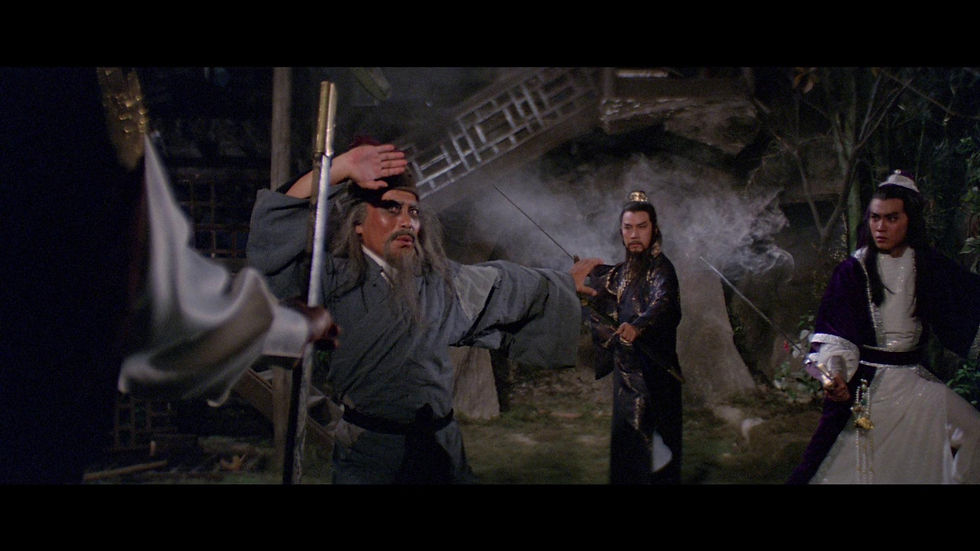


Bloody Parrot (1981)
A swordsman (Jason Piao Pai) investigating the theft of imperial treasure seeks the mysterious Bloody Parrot and finds himself at the center of an impossibly complex supernatural conspiracy.
Whereas Bat without Wings brought the eerie Technicolor Gothic of Mario Bava’s Black Sabbath (1963) to the swordplay costume drama, Super Inframan director Hua Shan’s Bloody Parrot slammed the horror/wuxia hybrid into overdrive with the energy of an Evil Dead movie. Of course, Sam Raimi’s 1981 classic wouldn’t hit Hong Kong screens until 1983, implying a closer kinship with Kuei Chih-Hung. Indeed, while Hua spends most of his time on swashbuckling fantasy action, he also pauses for extremely Kuei-esque grossout gags (autopsies, maggots, snakes, barfing, cannibalism – some might even claim that there is an excess of intestines spilled in this movie) and a Hex-like sequence of a possessed nude woman violently gyrating.
This time, the script is based on a Gu Long novel and, once again, it is nearly impossible to follow. The ever-busy Ni Kuang was again tasked with cramming an entire book into a single film. He does his best to hit the important story highlights, but Hua’s relentless pacing and focus on visual delights over narrative cohesion renders the plot a disjointed blur. Complicating matters, it seems that Gu actually abandoned the original 1974 serial after chapter 4. Chapters 5-16 were ghost written by Huang Ying.
In the end, the storytelling challenges don’t really matter, because Bloody Parrot is a wall-to-wall blast of creative energy and spectacle that without a doubt anticipates the jiangshi action-comedies that followed Shaw Bros.’ collapse in the mid-’80s. Perhaps it wasn’t as influential as Sammo Hung’s Encounters of the Spooky Kind (1980), but you can still see connections to Ricky Lau’s Mr. Vampire (1985) and Ching Siu-tung’s A Chinese Ghost Story (1987).
Content warning: a number of snakes are killed on-screen in this film. There’s also a dead monkey that might be real and a dead cat that is obviously a living, breathing cat with a little bit of fake blood on its muzzle.

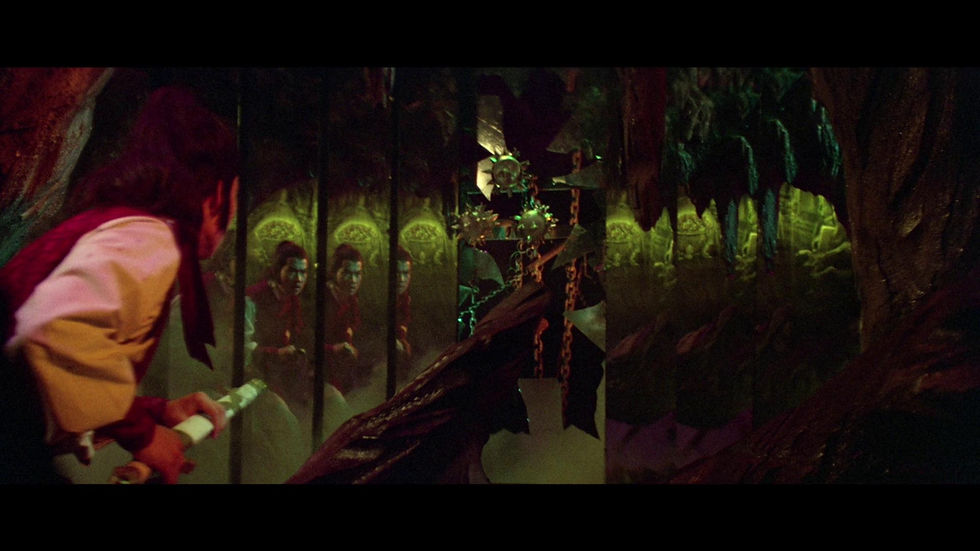
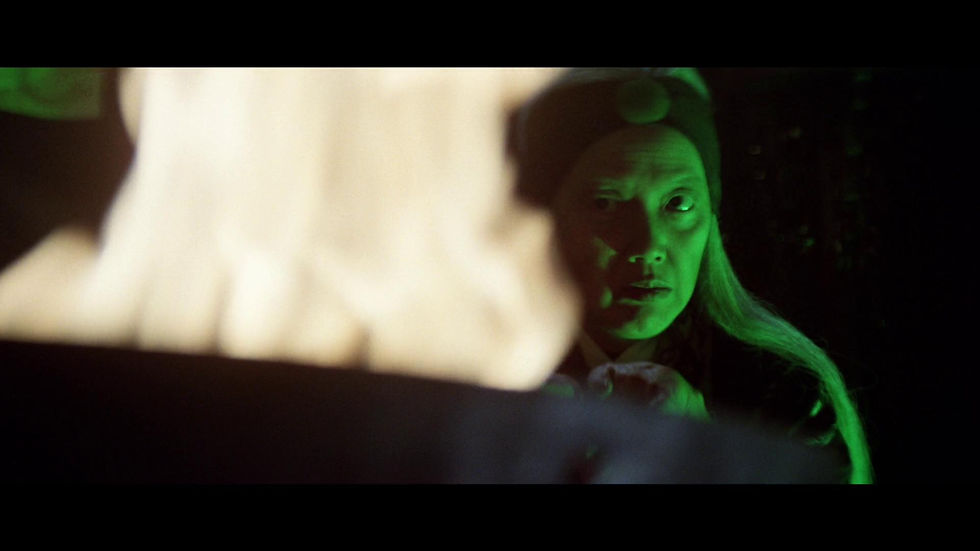


Video
Bat without Wings first hit US DVD in 2008 from Image Entertainment and debuted on a (slightly cut) German Blu-ray from Lucky 7, while Bloody Parrot has only ever appeared on HK DVD before Shawscope Vol. 4. Bat without Wings’ moody, colorful photography makes it a perfect candidate for a nice remaster and this vivid, highly textured transfer is another of the collection’s best. Bloody Parrot also looks good, especially the crisp outdoor shots. I definitely caught more print damage, though, and the darkest interiors occasionally appear a bit fuzzy.
Audio
Bat without Wings and Bloody Parrot are both presented only with LPCM 1.0 Mandarin dub options. Each track is a bit on the tinny side, but the general mixes are clean and pretty well layered for mono dub tracks. The familiar De Wolf library musical cues are nice and rich when clarity really counts, especially in Bloody Parrot’s case, where the music plays a larger role in the overall texture of the film.
Extras
Bat without Wings and Bloody Parrot commentaries by Samm Deighan – The author of Revolution in 35mm: Political Violence and Resistance in Cinema from the Arthouse to the Grindhouse, 1960–1990 (PM Press, 2024) and co-host of the Twitch of the Death Nerve podcast returns to the Shawscope series with a look at the productions, the careers of the casts & crews, the history of the wuxia genre, the state of Shaw Bros. horror and exploitation in the late ‘70s and early ‘80s, and tries to unwind the convoluted plots of these “bonkers” and “absolutely bananas” motion pictures.
Disc 7:

The Fake Ghost Catchers (1982)
On the run from corrupt government officials, Zhou Peng (Cheung Chin-Pang) seeks refuge with his cousin, Bao Tuo (Hsiao Ho), who is working as an apprentice to a charlatan spiritual medium. Later, mayhem occurs when the two team up with a vengeful ghost.
Movies about paranormal investigation were nothing new in the early 1980s, but Ivan Reitman’s Ghostbusters (1984) casts a long shadow over the entire subgenre to the point that you might assume that a Shaw Bros. action comedy called The Fake Ghost Catchers was an attempt to cash-in on its box office. But this is merely cinematic synchronicity, because director Lau Kar-wing’s film was released a solid two years before Reitman’s.
Fake Ghost Catchers may have been drawing from Poltergeist (1982) and The Exorcist (1974), as well as some of the films that inspired Ghostbusters, like Edward F. Cline’s Ghost Catchers (1944) and various Abbott and Costello comedies, but, as a wuxia period piece, it shares few direct ties to any Hollywood paranormal investigation movies. It's really a Chinese-set adventure that occasionally spoofs the séances and rituals of other Hong Kong horror movies. Its closest cousins are the constantly invoked Encounters of the Spooky Kind and Lau Kar-leung’s The Shadow Boxing (1979) – playful movies that nonetheless take their supernatural and horror aspects seriously. The mischievous buddy comedy bits and even some of the set-pieces also anticipate aspects of the Mr. Vampire series.
I’m surprised that Fake Ghost Catchers doesn’t have a better reputation. I assume that it was simply overshadowed by Shaw’s more exploitation-y grossout horrors and Golden Harvest jiangshi movies, but it deserves recognition for its better-than-average production design, energetic fight scenes, creative violence, and sheer star power of its cast, including Lily Li, Hsiao Ho, Cheung Chin-Pang, Johnny Wang Lung-Wei, and Sheng Fu (the film was released about a year before his untimely death). Director Lau was also a star choreographer and performer. The younger brother of Lau Kar-leung, he’s best-known for his Sammo Hung collaborations, Odd Couple (1979) and Skinny Tiger, Fatty Dragon (1990).

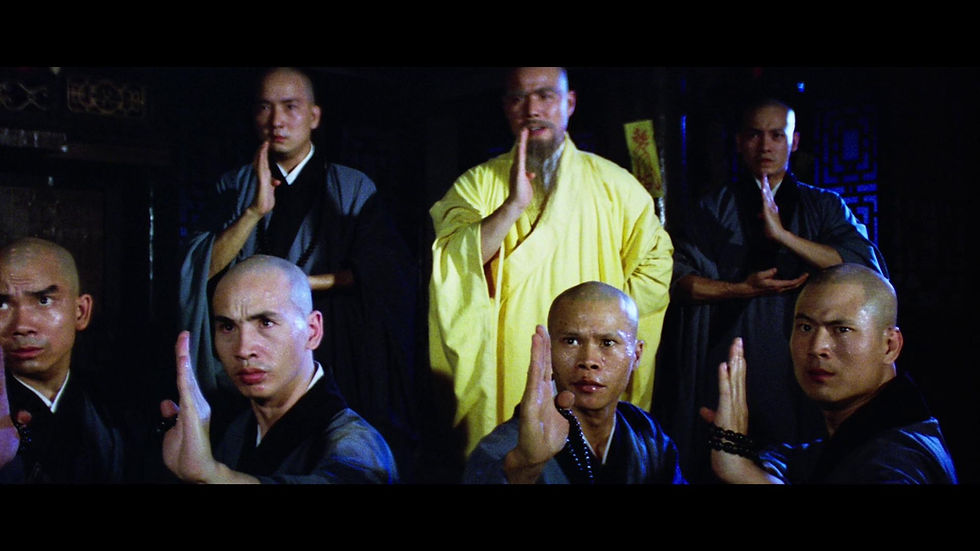


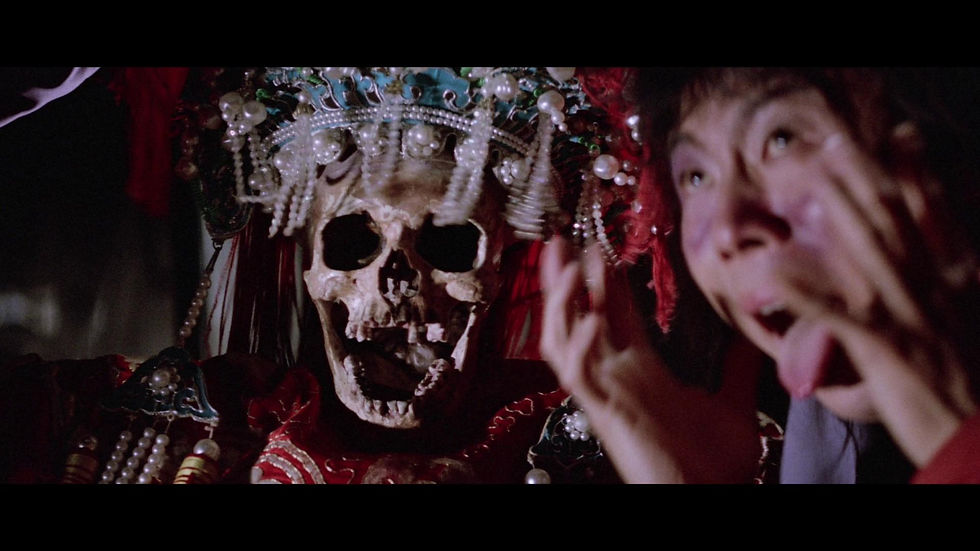
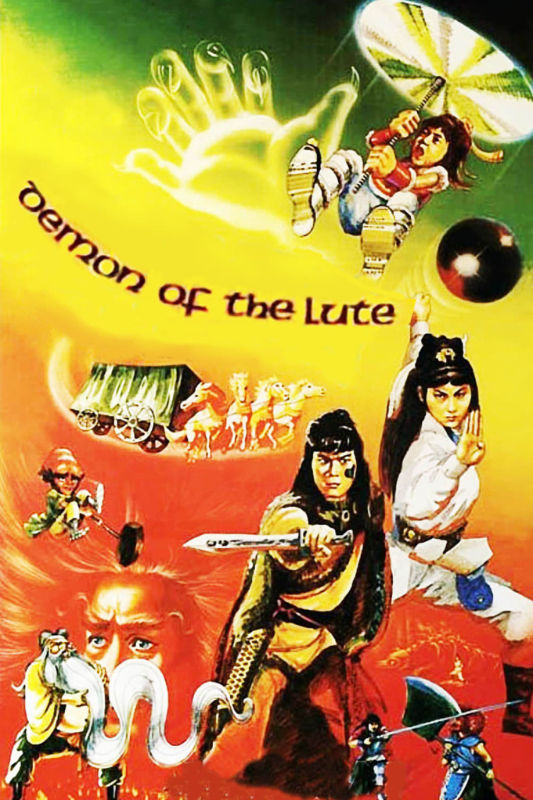
Demon of the Lute (1983)
An orphaned warrior known as Flying Monkey (Chin Siu-Ho) faces a motley crew of mystical heroes and villains in an attempt to uncover his past and combat a being of mass destruction known as the Demon of the Lute.
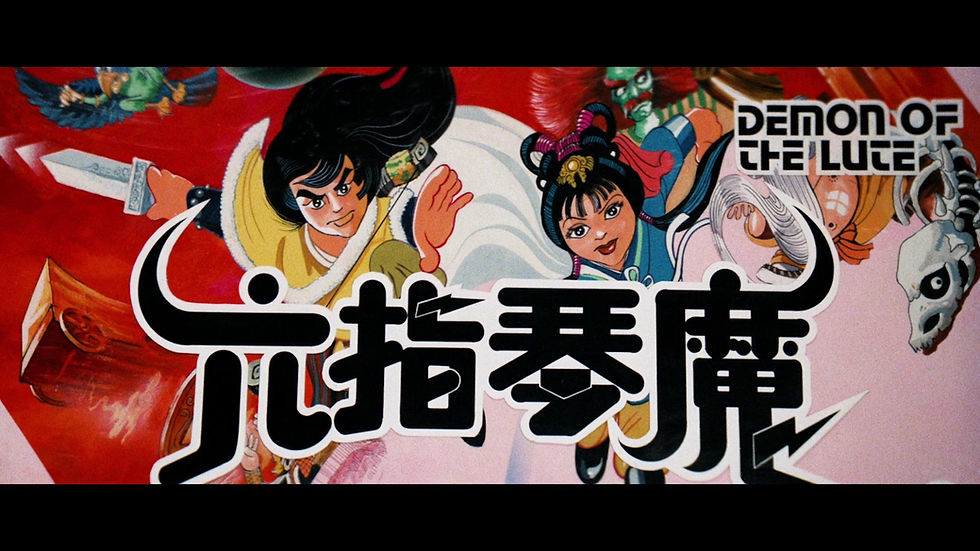
Actor turned first-time director Tang Tak-Cheung’s Demon of the Lute (1983) is another wacky comedy, but also functions as a family-friendly antidote to the sex, violence, and gross-out ethos of the Ho Meng-Huathe and Kuei Chih-Hung movies included with this collection. This is immediately illustrated by the opening titles’ comic book sketches and sing-along theme song, “Six-finger Guitar Demons,” by Thomas Choi. The cartoonish aesthetic follows through to the live-action footage, its colorful costume/make-up designs, slapstick humor, oversized weapons, and wire-assisted action scenes. One of the main characters, Ding-Dong (Kei Kong-Hung), is also a literal child.
The film is based on one of Ni Kuang’s novels, Six-Fingered Lute Devil, which was also the basis of Chan Lit-ban’s Six Fingers (1965), Ng Min-Kan’s more serious wuxia drama Deadful Melody (1994), and a 35 episode BTV series in 2004. Kuang must have been too busy scripting Chang Cheh movies at the time, because Tang ended up writing his own adaptation. Producer Mona Fong obviously saw potential in the script, as evident by the number of expensive special effects (I assume that Shaw was trying to directly compete with Tsui Hark’s Zu Warriors of the Magic Mountain [1983], which received aid from Hollywood FX artists) and the caliber of the cast, including Kara Wai, Venom MobberPhillip Kwok, Jason Pai Piao, Lee Hoi-Sang, and Chin Siu-Ho.
Tang only made one other film as lead director, Long Road to Gallantry (1984), and popped up as an actor in a couple of movies after Demon of the Lute. His style is rough and scattershot, but also energetic and playful in a way that compliments Demon of the Lute’s childlike charms.


Video
Both The Fake Ghost Catchers and Demon of the Lute were available on R3 HK and Taiwan DVD, and Demon of the Lute was included on a French double-feature Blu-ray with Lu Chun-Ku’s Holy Flame of the Martial World (1983), but have been completely unavailable on North American home video or streaming until now. The 2.35:1, 1080p transfers are a bit on the gritty side – The Fake Ghost Catchers exhibits more negative damage than most titles in the collection and Demon of the Lute is particularly grainy – but, again, the 2K restoration assures tighter details and better textures than the original Celestial Entertainment transfers usually supplied for HD releases.
Audio
Both films are presented with Cantonese and Mandarin audio options in uncompressed LPCM. Fake Ghost Catchers’ Cantonese track features better lip sync and volume levels, while Demon of the Lute’s Mandarin dub is slightly superior in terms of clarity and depth. I recognized a number of Fake Ghost Catchers’ musical cues, but couldn’t place any of the non-De Wolfe melodies. Shazam was no help, either. On the other hand, as mentioned, Demon of the Lute has an original title theme and variations on that theme featured throughout the film. There are also some original synth cues and rock songs from credited composers Chao Cho-Wen, Chung Yao-ma, and Shao Feng.
Extras
Demon of the Lute commentary with Frank Djeng – This is the Hong Kong cinema expert’s second Shawscope Vol. 4 commentary after his Super Inframan track with Erik Ko. Djeng is his typically informative and engaging self, covering the production, the wider careers of the cast & crew, early ‘80s trends in Hong Kong fantasy, and adaptations of Ni Kuang’s work.
Disc 8:
Seeding of a Ghost (1983)

Portrait in Crystal (1983)
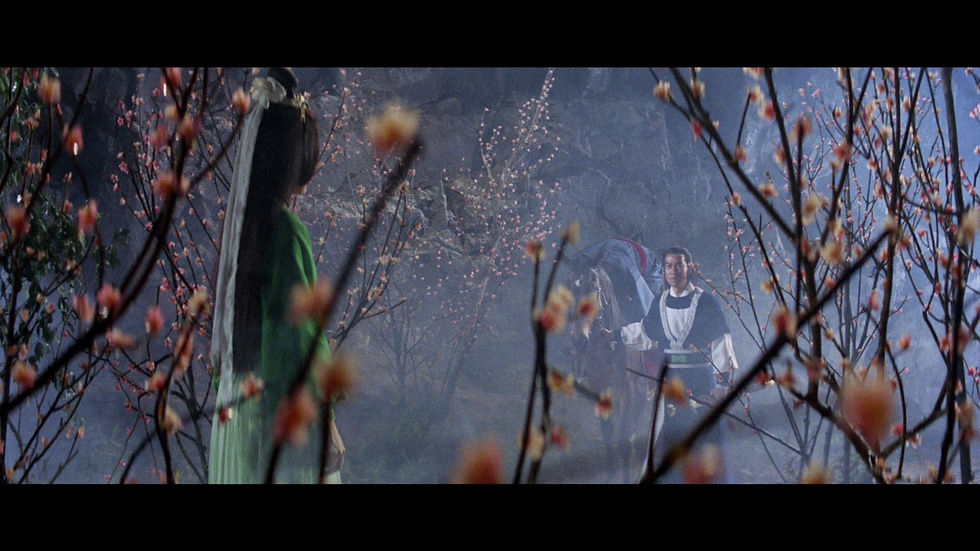
An expert sculptor and master swordsman (Jason Pai Piao) ignores folkloric warnings and splashes his latest masterpiece with blood, unleashing a murderous, crystalline spirit. With his sidekick, Fatty (Chun Wong), in tow, he journeys into the underworld to make things right.
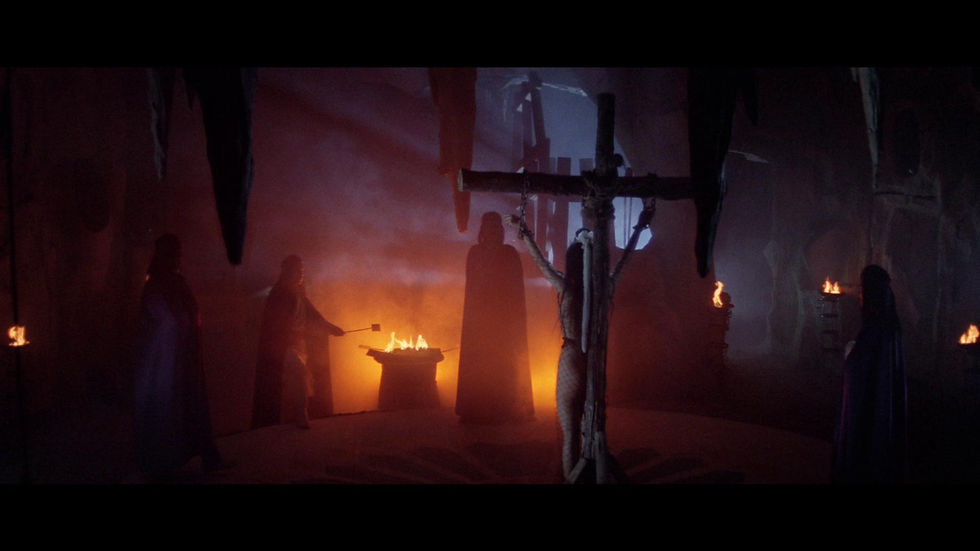
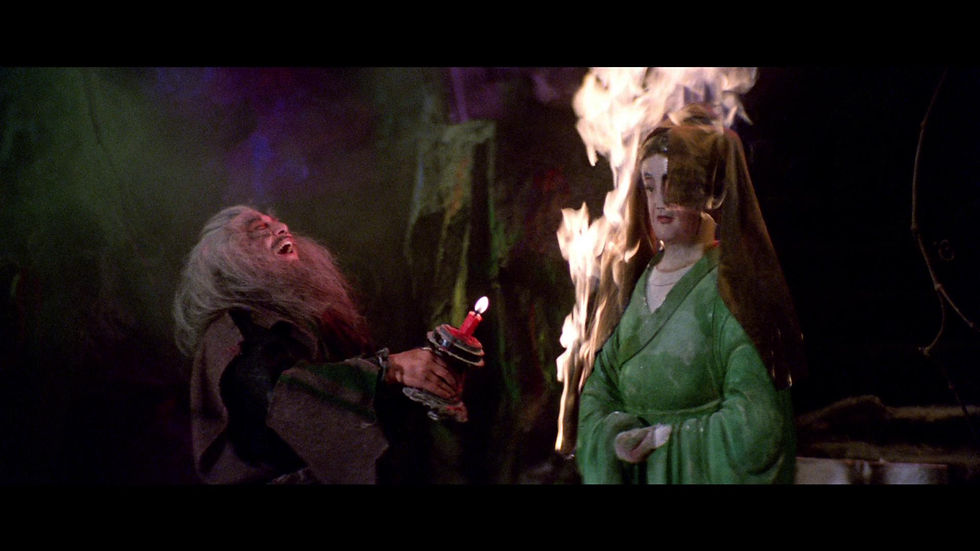
Hua Shan followed up Bloody Parrot with Kung Fu Zombie (1981) for The Eternal Film Company, then returned to Shaw for another fantasy/horror hybrid called Portrait in Crystal. Again, the relentless pacing and torrent of characters and plot twists makes the story all but impossible to follow, but it’s hard to care when the visual assault is so appealing. My penchant for Italian cult cinema may be blinding me to the film’s wider influences, but, again, I see a lot of Mario Bava’s rainbow-gelled, smoky Gothic trademarks here. By its nature, the convoluted murder mystery aspects of the story could also be viewed as a roundabout wuxia-ification of giallo conventions, in line with Kuei Chih-Hung’s martial arts slasher Corpse Mania (1981).
Stunt coordinators Teng Te-hsiang, Huang Chih-ming, and Cheng Chia-sheng combined efforts for a handful of truly wild fight sequences, though these depend more on flashy special effects, vivid bloodsplatter, and kaleidoscopic smash-zooms than they do intricate choreography. Gory highlights include multiple characters whose stomachs expand and burst, spilling their intestines, a warrior being stabbed to death by his own sword-wielding severed arm, and a mystic fighter exploding from the inside out, like Michael Ironside at the end of Scanners (1981).
The one thing that arguably puts Bloody Parrot ahead of Portrait in Crystal is the latter’s use of dopey comedic interludes. I say arguably, because Chun Wong’s performance is reasonably funny and, without the comic relief set-pieces, the film would probably only run about 45 minutes.



Video
Portrait in Crystal was previously released on HK DVD, Aussie BD from Imprint, and French BD via Spectrum (on a triple-feature with Yueh Feng’s Bells of Death [1968] and Chang Cheh’s Legend of the Fox [1980]). Arrow’s 2.35:1, 1080p remaster exhibits minor damage, usually vertical streaks (the anamorphic distortions are inherent in the material and not to be considered errors), but is generally a crisp and naturalistic affair that accurately portrays cinematographer Nico Wong Man-Wan's surprisingly delicate lighting schemes. The palette is eclectic with rich shadows and poppy highlights, and textures are complex with only slight compression noise.
Audio
Portrait in Crystal is presented with Cantonese and Mandarin mono options in LPCM audio. The Cantonese track is vastly superior in this case. The actors were clearly speaking Cantonese on set, the dubbing better fits the performances (noting that a lot of the voices might not belong to the actors), and volume levels are superior to the Mandarin track, which is soft enough to muffle some of the effects and music. As before, I recognized some musical cues from outside of other Shaw films and the De Wolfe library, but was unable to place them. These sit alongside early-’80s standard synth, credited to So Jan-Hau and Stephen Shing Gam-Wing.
Extras
There are no Portrait in Crystal specific extras on the disc.
Disc 9:

Twinkle Twinkle Little Star (1983)
A young woman (Cherie Chung Cho-Hung) is rejected by her fiancée, who thinks that she’s lying about having been abducted by a UFO and molested by space aliens. Later, she teams up with a pair of loser private eyes/debt collectors (James Yi-lui and Tam Tin-nam) to prove her story.
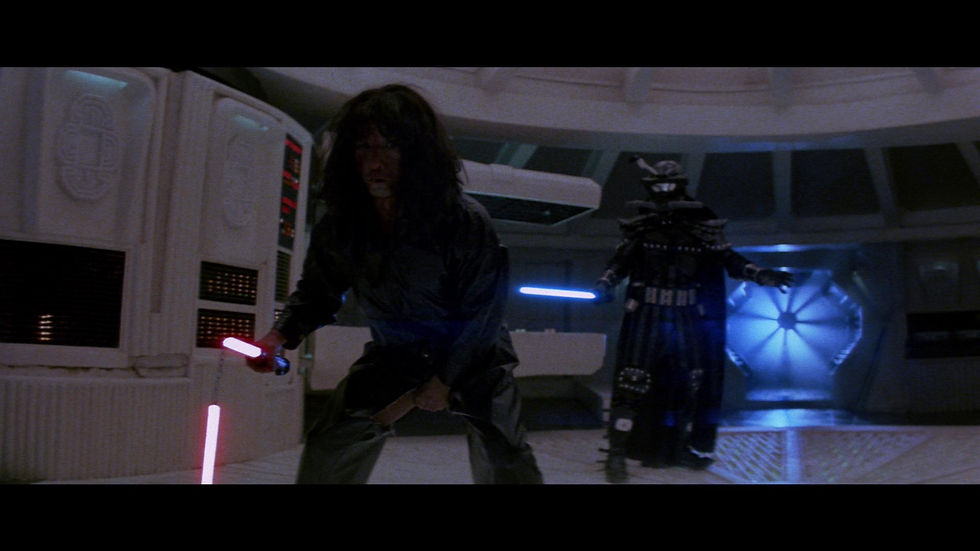
Shawscope Vol 4 ends on a rather low note with Alex Cheung’s Twinkle Twinkle Little Star, a mostly annoying combination of absurdist gags, musical interludes, situational comedy, and the Zucker, Abrahams & Zucker brand of spoofery. It’s flanked by parodies of Richard Donner’s Superman (1978), George Lucas’ Star Wars, Spielberg's Close Encounters of the Third Kind (1977), Ridley Scott’s Alien (1979), Martin Scorsese’s Taxi Driver (1976), and other recent Hollywood hits, but is generally attuned to the tastes of its Hong Kong audience, putting it more in line with the wildly popular Aces Go Places series and British imports, like the Carry On movies, Monty Python, and Benny Hill.
Though not measurably more obnoxious than the low-brow gags of Hex vs. Witchcraft or Hex After Hex, Twinkle Twinkle Little Star doesn’t have a Kuei Chih-Hung level of talent behind the camera. Chueng’s terrible sense of pacing, in particular, drives jokes into the ground before they can even become laughs. His direction and cinematography is experimental (or undisciplined?) enough to be visually appealing (Gordon Chan’s production design does a lot of heavy lifting), but not enough to overcome the episodic and laborious script that somehow took an astonishing seven people to write.


Video
Twinkle Twinkle Little Star was released on HK DVD via IVL, but wasn’t released officially on North American home video or anywhere on an HD format. Arrow is making up for the fact that it’s kind of a bad movie by premiering three different versions on Blu-ray – the Cantonese cut (96:10), the Mandarin cut (97:15), and a cut that adds a single Mandarin-exclusive scene (one excised due to a reference to China’s leader at the time) to the Cantonese version (97:15). The 2K remaster does what it can with Cheung’s super-diffused, shallow focused photography, but be prepared for softer edges, grittier texture, and a little mold.
Audio
As indicated by the three different cuts, Twinkle Twinkle Little Star is presented with Mandarin and Cantonese audio options. The Cantonese track has considerable aspirated hiss and occasional clicks, but is still preferable to the flatter, more muted Mandarin track.
Extras
Commentary with Frank Djeng – Djeng spends a lot of his time explaining the cultural in-jokes, political satire, and Cantonese wordplay, which is quite valuable in contextualizing such an unlikable and chaotic movie. He also covers the production and breaks down the careers of the cast & crew.
Interview with Alex Cheung (34:20, HD) – The writer/director/cinematographer jovially looks back on his early life, his career in TV and film, and the making of Twinkle Twinkle Little Star.
Victor Fan on Twinkle Twinkle Little Star (25:04, HD) – The author of Cinema Approaching Reality: Locating Chinese Film Theory (University of Minnesota Press, 2015) discusses the film, its many cultural and pop references, its modernist approach, Shaw Bros.’ attempts to compete with Hollywood and Golden Harvest, and Alex Cheung’s wider filmography, as well as that of the main cast.
Cantonese and Mandarin trailers
Disc 10:
Additional bonus features
Hong Kong: The Show of Mister Shaw (13:10, SD) – A 1972 French TV profile of Shaw Bros., presented by Cuong Nguyen Long. It includes behind-the-scenes footage from Ho Meng-hua’s The Lady Hermit (1971).
The Movie Maniac: The Legacy of Ho Meng-hua (14:27, HD) – Paperbacks from Hell: The Twisted History of ’70s and ’80s Horror Fiction (Quirk Books. 2017) author Grady Hendrix takes us on a trip through the career of the unique and eclectic filmmaker.
Critical appreciations:
Super Inframan with Leon Hunt and Luke White (21:33, HD) – The authors of Kung Fu Cult Masters: From Bruce Lee to Crouching Tiger (Wallflower Press, 2003) and Fighting without Fighting: Kung Fu Cinema’s Journey to the West (Reaktion Books, 2022) explore the creative and commercial inspirations behind Hua Shan tokusatsu pastiche.
Super Inframan with Kim Newman (21:59, HD) – The author of Nightmare Movies: Horror on Screen Since the 1960s (Bloomsbury, 2011) offers his perspective on the film and its legacy as a superhero movie.
Battle Wizard with Victor Fan (17:53, HD) – Fan returns to discuss the works of wuxia author Louis Cha (who he refers to as Jin Yong) and Pao Hsueh-li’s film adaptation.
Bat without Wings with Wayne Wong (12:48) – The author of Martial Arts Ecology
Aesthetics, Philosophy and Cinematic Mediation (Edinburgh Press, 2026) guides us through Chor Yuen’s career, emphasizing Gothic-tinged adaptations of wuxia stories, like Bat without Wings.
Demon of the Lute with Luke White (21:37, HD) – White returns for a solo chat about Tang Tak-Cheung’s uniquely hallucinogenic and child-friendly adventure.
Demon of the Lute with Victor Fan (23:28, HD) – Fan finishes things up by exploring the film’s production and recalls his own childhood memories of seeing the film and reenacting it on the playground.

Trailers Gallery:
Oily Maniac Hong Kong trailer
Battle Wizard Hong Kong Mandarin, Hong Kong English, and German trailers
Black Magic reconstructed Hong Kong trailer, German trailer, and US TV spot
Black Magic Part 2 Hong Kong Mandarin, Hong Kong English, and US trailers
Bewitched Hong Kong Cantonese and Mandarin trailers
Hex Hong Kong trailer
Hex vs Witchcraft reconstructed Hong Kong trailer
Hex After Hex Hong Kong Cantonese and Mandarin trailers
Bat Without Wings Hong Kong trailer
Bloody Parrot Hong Kong trailer
The Fake Ghost Catchers Hong Kong trailer
Demon of the Lute Hong Kong trailer
Seeding of a Ghost Hong Kong trailer 1, Hong Kong Cantonese trailer 2, Hong Kong Mandarin trailer 2
Portrait in Crystal Hong Kong trailer
Bibliography:
Hong Kong Action Cinema by Bey Logan (Titan Books, 1995)
Chinese Martial Arts Cinema: The Wuxia Tradition by Stephen Teo (Edinburgh University Press, 2009)
Mondo Macabro: Weird & Wonderful Cinema Around the World by Pete Tombs (St. Martin's Griffin, 1998)
The Autarkic World of Liu Chia-Liang, found in A Study of the Hong Kong Martial Arts Film, by Roger Garcia (presented by the HK Urban Council, 1980)
The Encyclopedia of Martial Arts Movies by Bill Palmer, Karen Palmer, and Ric Meyers (Scarecrow Press, 1995)
The images on this page are taken from the BDs and sized for the page. Larger versions can be viewed by clicking the images. Note that there will be some JPG compression.
Comments