


Wake in Fright 4K UHD Review


Arrow Video
4K UHD Release: June 30, 2026
Video: 1.85:1/2160p (HDR10/Dolby Vision)/Color
Audio: English DTS-HD Master Audio 1.0
Subtitles: English SDH
Run Time: 108:21
Directors: Ted Kotcheff
John Grant (Gary Bond), a bored schoolteacher working in the remote outback, stops overnight in the frontier mining town of Bundanyabba on his way back to Sydney for the Christmas holidays. After he loses all his savings in a bad gambling bet, Grant finds himself marooned and swept up in the vortex of a succession of hard-drinking, hard-living, and crude men led by Doc (Donald Pleasence) who threaten to make him just as crazy, drunk, and violent as they are. (From Arrow’s official synopsis)

Post-WWII, following many years of decline, the Australian film industry was rescued by a concerted, government-supported effort to fund new films and train new filmmakers via the Australian Film Television and Radio School. As a result, more than 400 new movies were released between 1970 and 1985. Starting (arguably) with Nicolas Roeg’s Walkabout (1971), international audiences were introduced to a new brand of artistic drama, followed by a new brand of rowdy comedy in Bruce Beresford’s The Adventures of Barry McKenzie (1972) and a new brand of horror film in Terry Bourke’s Night of Fear (1972). The prestige titles were categorized as part of the Australian New Wave and the others were checkily dubbed “Ozploitation.”
Ted Kotcheff’s Wake in Fright (1971), based on the popular 1961 novel by Kenneth Cook, fits the arthouse and exploitation classification and even premiered alongside Walkabout at the 1971 Cannes Film Festival*, but weak domestic box office, controversy, and studio apathy led it to be brushed aside and forgotten, while Roeg’s film thrived and became the poster child for the New Wave movement. Practically forgotten, the original negatives disappeared and existing prints deteriorated, and Wake in Fright was considered a lost movie. Finally, elements were found in the mid-2000s and a remastered version premiered at the 2009 Sydney Film Festival.
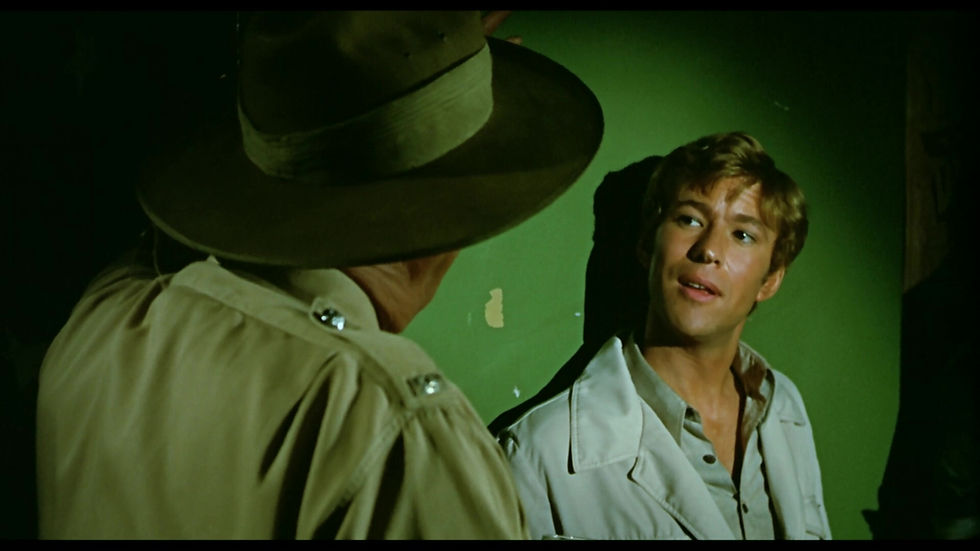
While born out of the same urban vs. rural angst that spawned American psycho-thrillers, like Tobe Hooper’s The Texas Chain Saw Massacre (1974) and John Boorman’s Deliverance (1972) – films that themselves influenced Ozploitation classics, including Richard Franklin’s Road Game (1981) and Russell Mulcahy’s Razorback (1984) – Wake in Fright’s terrors are more emotional than visceral. It depicts the fringes of Australian culture as unknowable and alien. Spiritually speaking, the dead mining town of Bundanyabba is indistinguishable from Lovecraft’s Innsmouth or the pagan paradise of Summerisle from Robin Hardy’s The Wicker Man (1974). Its people are sick from isolation and engaging in their own brand of occult rituals involving binge drinking, gambling, and animal sacrifice at the end of a shotgun.
Author cook was a native Aussie and clearly recognized the existential horror inherent in the outback, its arid natural landscape, and its many venomous creatures. Kotcheff, on the other hand, was Canadian. Before filming, he traveled to Broken Hill, Australia (where the film was eventually shot) to do research, visit pubs, and interview locals before filming, eventually developing his own perspective on the land and its most insular rural cultures**.
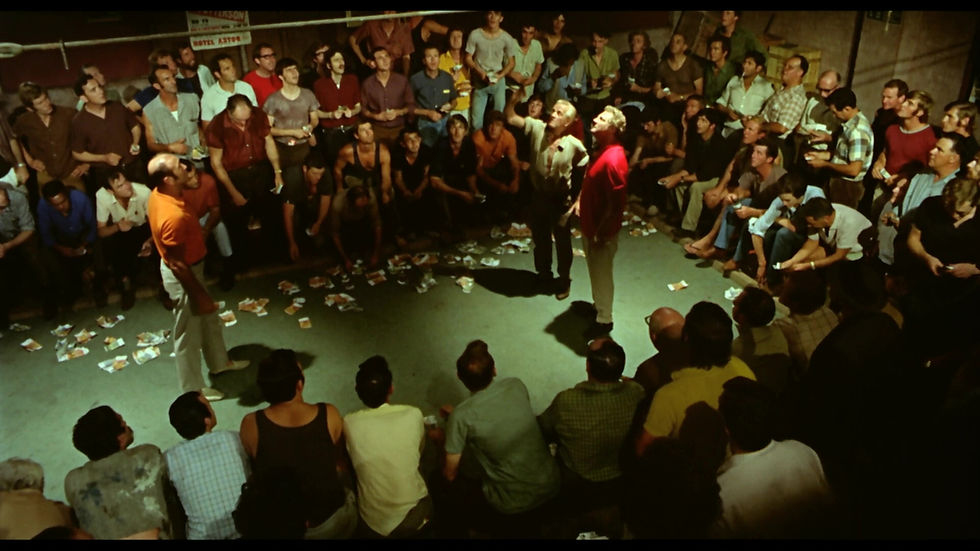
Similarly, star Gary Bond was a UK transplant, which plays into his character’s outsider status. He sells the role of a middleclass everyman trapped in a nightmare cycle of suffocating heat, hostile hospitality, and performative masculinity. Bond is great, but is predictably outshined by another Briton, Donald Pleasence, putting on his best down-under accent to play local Clearance, nicknamed Doc, an acclimated outsider, who can see through the malevolent charm of the rest of the ‘Yabbas.’ With the exception of Sylvia Kay, the rest of the cast is made up of actual locals, ensuring that Bond is surrounded by authentic Aussie antagonists.
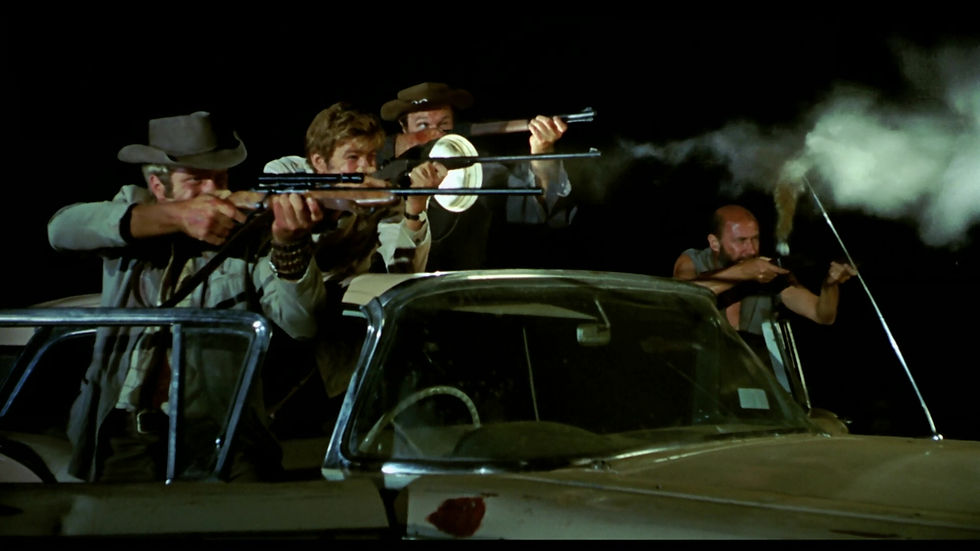
Wake in Fright gets a must-see recommendation with one major caveat about its frank depiction of animal slaughter. On-screen animal killing is usually divided into three categories: accidental deaths that are left in the final cut, documentation of slaughter unrelated to the production (i.e. shooting footage in a meat processing plant), and footage staged specifically for the film, like you’d see from an Italian cannibal movie. Wake in Fright falls somewhere between the second and third option, in that the filmmakers tagged along on a kangaroo cull that was already scheduled, but embellished for the sake of the movie. Even putting moral arguments aside (later shots of actors killing ‘roos by hand are dramatized), the sequence is hard to watch and inspired walkouts during the film’s Cannes debut. It’s worth the content warning.

* Note that both Wake in Fright and Walkabout were made in Australia, but were helmed by a Canadian and Briton, respectively. Both films were also co-financed with the UK and US.
** When asked about the outback during the 2009 Sydney Film Festival Q&A, Kotcheff said: “Our north is vaster than your outback, but you have that same sense of brooding, empty landscapes that don’t liberate you, they scare you and entrap you. That whole masculine ethos was also very true of the Canadian north, so I had some sense of that.”
Bibliography/videography:
Wake in Fright (Australian Screen Classics) by Tina Kaufman (Currency Press, 2010)
Not Quite Hollywood: The Wild, Untold Story of Ozploitation (2008), directed by Mark Hartley

Video
As stated, Wake in Fright was considered a lost film for a long time. The only way to see it would’ve been to stumble upon a special screening of a ragged 16mm print. It was finally rescanned, restored, and theatrically released in 2009, and made its US Blu-ray debut from Drafthouse Films and Image in 2013. Now, Arrow Video is premiering the film on UHD in full 2160p with Dolby Vision/HDR10 upgrades. The images on this page are taken from the Drafthouse release and, because I’m not sure if Arrow’s transfer was taken from a separate master (I think it was, because there’s also an AU 4K UHD on the market), they’re only here for editorial purposes.
The color timing between the old and new releases is notably different. The most persistent hues are still oranges and yellows signifying the stifling heat of the outback in December, but this transfer introduces more reds and blues, and does away with the BD’s greenish tinting. This makes for a bigger difference between day shots, night shots, and interiors. The darkest sequences remain super high contrast and some shots are still inherently muddy (as intended, I assume), but the Dolby Vision boost helps really differentiate details and pushes shadows into absolute blackness. There are only minor artifacts throughout (a few vertical lines and white flecks) and grain levels appear accurate.

Audio
Wake in Fright is presented in uncompressed DTS-HD Master Audio 1.0 mono and its original English. Most of the soundtrack is made up of dialogue and incidental sounds, which are clear and natural, aside from a dash of tinniness. Purposefully cacophonic sequences, like those in the gambling den or kangaroo hunt, do feature some high volume distortion, but that’s sort of the point. English composer and jazz musician John Scott’s score, which mixes melancholic melodies with horror movie and spaghetti western themes, is a big highlight, setting and sometimes even counteracting the tone.
Extras
Commentary with director Ted Kotcheff and editor Anthony Buckley – This is the original 2008 track recorded for the Australian premiere and included with Drafthouse’s Blu-ray. Kotcheff and Buckley share behind-the-scenes anecdotes and look back on the challenges making the film, shooting on location, casting, and more. The track starts a bit stiff, but everyone loosens up a bit after about 20 minutes.
Commentary with Peter Galvin – This new, Arrow-exclusive track features the author of The Making of Wake in Fright, who takes a more academic approach as he explores the Wake in Fright’s production, its themes, its reception and influence, and the wider careers of the cast & crew.
Return to the 'Yabba’ (49:46, HD) – Film & television expert Andrew Mercado takes us on a tour of the Broken Hill locations as they appear now.
Take in Fright (20:42, HD) – Director of photography Brian West discusses the technical and physical challenges of shooting Wake in Fright, including tales of misadventure on set.
Sounds of the Outback (14:52, HD) – Sound editors Keith Palmer and Eddy Joseph break down the technical aspects of their jobs making sense of the original edit made in Australia, alongside more stories of drunken Aussie antics.
The Cinema's Great Squeaky Bald Git: Kim Newman Discusses the Career of Actor Donald Pleasence (14:51, HD) – The horror expert, novelist, and author of Nightmare Movies: Horror on Screen Since the 1960s (Bloomsbury, 2011) offers up a very nice tribute to the actor and his career, including film and trailer clips.
The Filmmaker and the Filmbuff: Philippe Mora and Paul Harris Discuss Wake in Fright (20:07, HD) – Mora, the director behind Mad Dog Morgan (1976), The Beast Within (1982), and others, teams up with critic Harris for a loose discussion about making movies, Wake in Fright, and the film’s legacy.

Archival interviews:
Yer Mad, Ya Bastard! (12:57, HD) – Interview with director Ted Kotcheff
Not Quite Hollywood interview with actor Jack Thompson (6:50, HD)
2009 Q&A with Ted Kotcheff at the Toronto International Film Festival (45:51, HD)
2009 audio interview with Ted Kotcheff, conducted by Paul Harris (130:27, HD, audio only)
2025 interview with composer John Scott, conducted by music historian Daniel Schweiger (15:30, HD, audio only)
Alternate scenes (10:40, HD) – A compilation of alternate footage and audio from a censored international cut that went by the title Outback.
TV reports:
2009 ABC 7:30 Report on the rediscovery and restoration of the film (6:35, HD)
1971 Who Needs Art? segment on Wake in Fright (5:52, SD)
Chips Rafferty obituary tribute by Ken G. Hall (3:27, SD)
US theatrical trailer, US TV spot, and restoration trailer
Foreign Visions of Local Stories – A trailer reel of Australian films helmed by overseas filmmakers, including The Overlanders (1946), Bitter Springs (1950), A Town Like Alice (1956), The Siege of Pinchgut (1959), The Sundowners (1960), They're a Weird Mob (1966), The High Commissioner (aka: Nobody Runs Forever, 1968), Age of Consent (1969), Walkabout, Sunstruck (1972), Sidecar Racers (1975), The Pyjama Girl Case (Italian: La ragazza dal pigiama giallo, 1977), The Earthling (1989), and The Coca Cola Kid (1985).

The images on this page are taken from the older Drafthouse/Image Blu-ray – NOT Arrow’s 4K UHD – and sized for the page. Larger versions can be viewed by clicking the images. Note that there will be some JPG compression.
Comments