


Black Belly of the Tarantula 4K UHD Review


Celluloid Dreams
Blu-ray Release: August 18, 2026 (limited edition)
Video: 1.37:1 and 1.85:1 (two options)/2160p (HDR10)/Color
Audio: Italian (remastered) and English DTS-HD Master Audio 2.0 Mono (both cuts); Italian DTS 2.0 mono (both cuts)
Subtitles: English, English SDH
Run Time: 97:53 (Italian cut), 87:57 (export cut)
Director: Paolo Cavara
A serial killer has Rome on edge! Paralyzing his victims, then proceeding to slice them open before their own eyes, this sadistic maniac must be stopped! Conflicted, burned-out, and feeling overwhelmed, Inspector Tellini must find the madman before he claims another victim in a case that edges closer and closer to his personal life. (From Celluloid Dreams’ official synopsis)

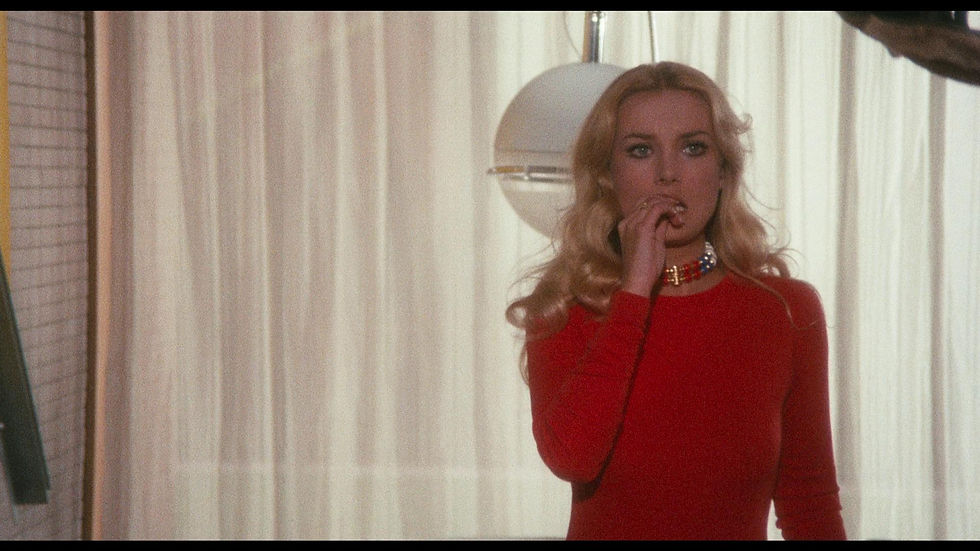
All genre trends have their peak year when the most applicable films are released in theaters and few regions embraced genre trends like the Italians did between the 1950s and 1980s. For example, the pepla peaked around 1964, the spaghetti westerns around 1968, the poliziotteschi around 1980 (I haven’t done the actual math on that one), and the post-apocalyptic movies around 1983. Between January and December of 1971, at least 42 gialli and giallo-adjacent thrillers were released in Italy and Spain. These films bridged the spectrum of quality, budget, prestige, and relevant longevity.
Paolo Cavara’s Black Belly of the Tarantula (Italian: La tarantola dal ventre nero) was released towards the end of the year, in September, when filmmakers were already beginning to recognize the genre’s limited shelf life. Co-writer (with Lucile Laks) and producer Marcello Danon covered his bases by mixing a serious detective drama with a stalk & slash bodycount movie and the vague promise of a sexploitation film and a lowbrow comedy about a spa for hapless middle-aged women, run by a blind masseuse and campy gay waiter. These softcore and comedic aspects barely account for more than a few minutes of screen time, but lend some sense of incompatible charm to the film whenever the already well-established giallo formula threatens to turn stale.

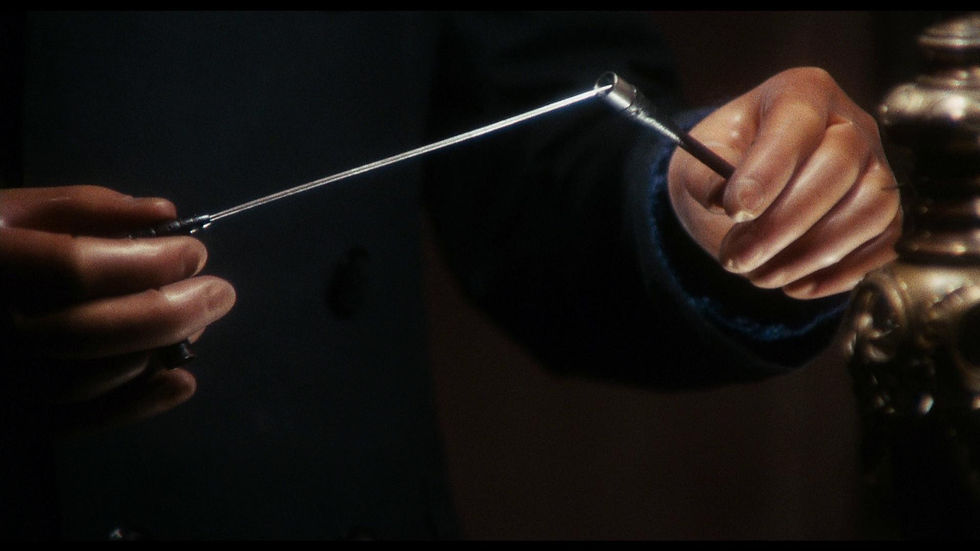
The wild success of Dario Argento’s The Bird with the Crystal Plumage (Italian: L'Uccello dalle piume di cristallo, 1970) inspired an animal-themed naming fad for gialli in the early ‘70s. Some filmmakers justified this by having said animals play a part in the plot, often as a clue. Black Belly of the Tarantula makes multiple references to tarantulas, but the key one is explained during a scene where an insect expert shows the investigating detective a wasp called a tarantula hawk (it’s actually a honey bee…) known for paralysing its prey, matching the killer’s modus operandi*. This turns out to be a cover up for drug trafficking and a red herring where the murders are concerned, but is still more effort than most animal-themed gialli put into making sense of their lengthy titles.
Cavara borrows liberally from other foundational gialli, especially Mario Bava’s Blood and Black Lace (Italian: 6 donne per l'assassino, 1964), from which he swipes a set piece featuring fashion mannequins and the killer’s signature look, which matches the prototypical long coat and black hat costume Argento also reused. Black Belly of the Tarantula does make one significant change, though, in that the killer wears semi-opaque surgical gloves, instead of black leather. Other notable connections to Bird with the Crystal Plumage include the killer keeping weapons in a red velvet box, the protagonist neglecting his vulnerable significant other in pursuit of the mystery, and the logistics of both the first murder and the foiled final (attempted) murder.

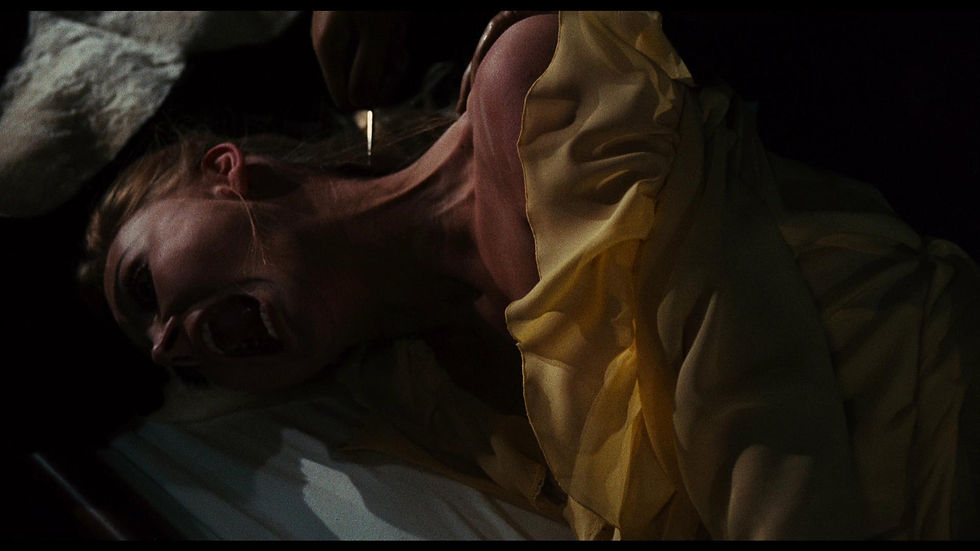
One way Black Belly of the Tarantula arguably set itself ahead of the curve was its combination of giallo and poliziottescho conventions. While police procedural elements had been part of the genre since its earliest days (including Bird with the Crystal Plumage), the specifically Italian brand of gritty cop thriller only really emerged after spaghetti westerns had mostly run their course, which means they were competing with gialli at the box office. If the Italian industry liked anything more than a trend, it was combining evolving trends, leading to hit hybrids, like Sergio Martino’s The Suspicious Death of a Minor (Italian: Morte Sospetta di una Minorenne, 1975) and Massimo Dallamano’s What Have They Done to Your Daughters? (Italian: La Polizia Chiede Aiuto, 1974).
Specifically, I’m referring to the main character being a cop, the drug trafficking subplot (which is ultimately a dead end), the surprisingly action-packed foot chases, and the fact that the lead detective is so focused on the case that he’s neglecting his significant other (a trope generally tied to hardboiled pulp stories). This all might have also been in reference to Bird with the Crystal Plumage, which has a police detective as a secondary lead, a couple of significant foot chases, and, as mentioned, a main character that puts his girlfriend in danger while obsessively investigating the case. Either way, Black Belly of the Tarantula’s well executed, genuinely dangerous stunts are done in the spirit of the insanely violent and patently irresponsible poliziotteschi that eventually overtook the gialli as the decade proceeded.
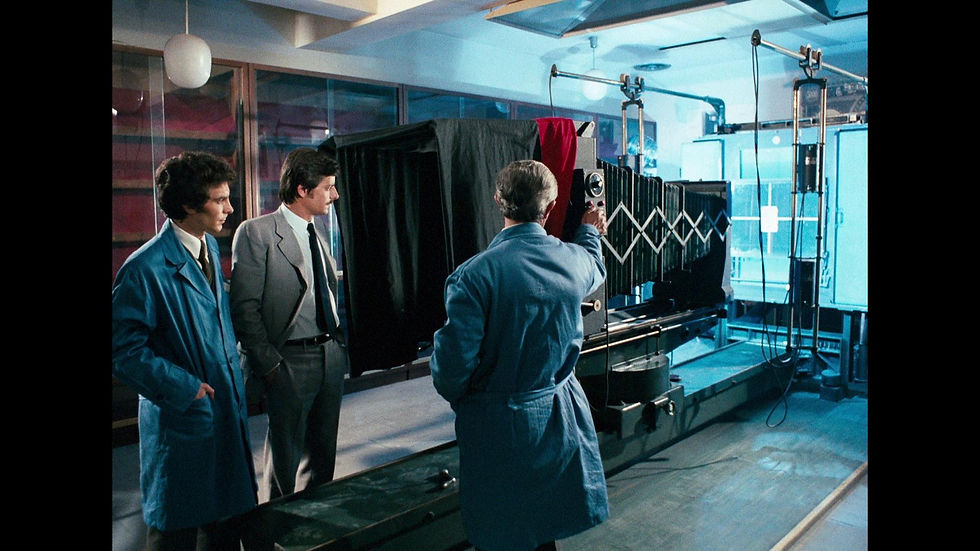

Cavara was one of three co-writer/co-directors of Mondo Cane (1962) with the so-called Godfathers of Mondo, Gualtiero Jacopetti and Franco Prosperi. He also made Women of the World (1963) with them, then made Malamondo (1964) and Witchdoctor in Tails (1966) on his own. He also made a sort of dramatized making of Mondo Cane called The Wild Eye (Italian: L'occhio selvaggio, 1967) and took one more stab (pun intended) at the giallo formula with Plot of Fear (1976).
One might assume that this history of shockumentaries, combined with the reputation of Battle of Algiers (1966) cinematographer Marcello Gatti and the various cop fiction trappings, would mean that Black Belly of the Tarantula has a cinéma vérité quality. While it occasionally resembles the vérité grit of New Hollywood crime films, like William Friedkin’s The French Connection (which was released a month after Cavara’s film in 1971), the overall film is blocked and shot using the creative compositions and camera movements of the post-Bird with the Crystal Plumage tradition. Despite the rawness of some sequences, Cavara and Gatti genuinely deserve credit for elevating a rather scandalous grindhouse product by attempting to match the bold stylizations of Argento, Dallamano, and Luigi Bazzoni.


The upper-tier cast also lends an air of class to the exploitation spectacle and short bouts of crude humor. Male lead Giancarlo Giannini was a major, mainstream romantic and dramatic lead throughout the ‘70s, ‘80s, and ‘90s in movies like the Lina Wertmüller’s Swept Away (1974), Luchino Visconti’s final film, The Innocent (1976), the Francis Ford Coppola section of New York Stories (1989), Ridley Scott’s Hannibal (2000), and he had a recurring role in two of the Daniel Craig Bond movies, Casino Royale (2006) and Quantum of Solace (2008). Before that, he was in Ernesto Gastaldi’s Libido (1965), which I believe is his only other giallo appearance.
Giannini isn’t the only Bond alum in the film. He’s joined (however briefly) by Thunderball (1965) actress Claudine Auger, who also pops up in Mario Bava’s Twitch of the Death Nerve (1971), co-star of both The Spy Who Loved Me (1977) and Aldo Lado’s Short Night of Glass Dolls (Italian: La corta notte delle bambole di vetro, 1971) Barbara Bach, and Barbara Bouchet, who appeared in the original Casino Royale (1967), but really found her niche in Italian exploitation movies.


Bach’s giallo queen resumé includes this film, Alberto De Martino’s Man with the Icy Eyes (Italian: L'uomo dagli occhi di ghiaccio, 1971), Silvio Amadio’s Amuck! (Italian: Alla ricerca del piacere, 1971), Ferdinando Merighi’s The French Sex Murders (Italian: Casa d'appuntamento, 1972), Emilio Miragila’s The Red Queen Kills Seven Times (Italian: La dama rossa uccide sette volte, 1972), and Lucio Fulci’s Don’t Torture a Duckling (Italian: Non si Sevizia un Paperino, 1972).
* Lucio Fulci may have recycled the long needle as a murder weapon in the uncharacteristically bloodless late-stage giallo Murder Rock (Italian: Murderock: Uccide a passo di danza, 1984), though Black Belly of the Tarantula’s killer uses a needle to paralyze victims, before cutting into their bellies. Murder Rock’s killer simply stabs people. I’ve also long noticed similarities between the plots of Black Belly of the Tarantula and The New York Ripper (Italian: Lo squartatore di New York, 1982), leading me to believe that Fulci was fond of this particular picture.
Bibliography
Italian Giallo in Film and Television: A Critical History by Roberto Curti (McFarland, 2022)
La Dolce Morte: Vernacular Cinema and the Italian Giallo Film by Mikel J. Koven (Scarecrow Press, 2006)


Video
I can’t find any evidence of Black Belly of the Tarantula being officially released on North American VHS or Betamax, which would make Blue Underground’s 2006 DVD its home video debut in the region. German company CMV Laservision released the first 1080p Blu-ray in 2016 and, earlier this year, French company Carlotta Films put out the first UHD version. Celluloid Dreams’ North American debut features a new 4K scan of the original 4-perf camera, done by VIGGO in Rome. All color grading and clean-up was done in-house, and a theatrical release positive was used as reference for the color temperature and HDR10 grading.
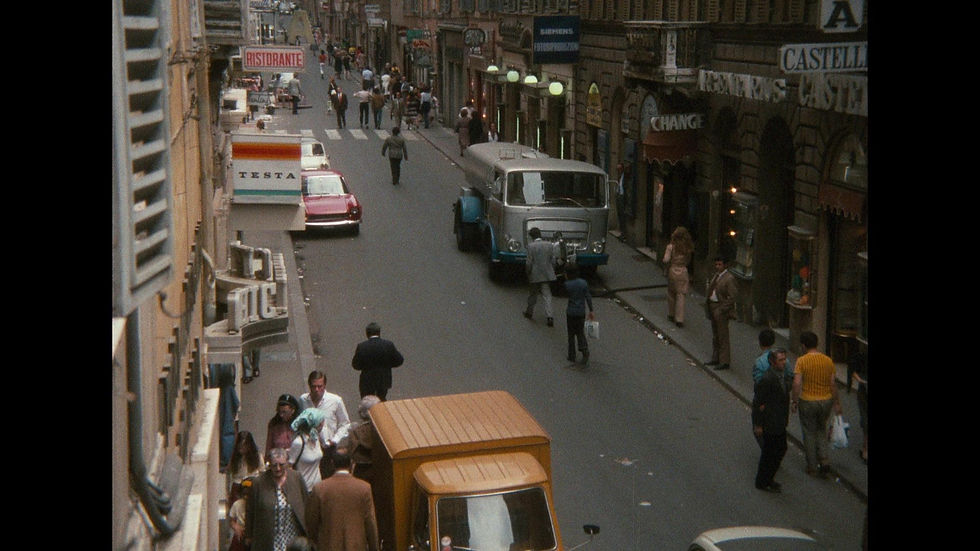
Every digital version of the film, including Carlotta’s UHD, has been framed at either 1.78:1 or 1.85:1, but cinematographer Marcello Gatti insists that the intended theatrical ratio was 1.37:1. Celluloid Dreams splits the difference here by including both 1.37:1 and matted 1.85:1 video options. I’ve included caps from both versions as they appear on the included Blu-rays. I was admittedly skeptical of the 1.37:1 framing, because I’d only seen the film in 1.85:1, but a lot of the compositions really do look nicer with more vertical information at the top and bottom of the frame.


Besides the difference in aspect ratio, the 1.85:1 transfer is, by design, slightly zoomed, so its grain is chunkier than its 1.37:1 counterpart. With that in mind, both versions appear accurate in this regard and there aren’t any major signs of DNR, over-sharpening, or other sloppy digital clean-up. Detail/clarity differences between the bulk of the footage, the fuzzy, soft focus, glamour shot inserts (usually of Barbara Bouchet), optical zooms, and the stock footage of a wasp and spider fighting are all part of the inherent material.
Unlike CD’s Short Night of Glass Dolls 4K, there isn’t a big difference in the brightness between this and other releases. I don’t have to beg readers to take the HDR boost into consideration when looking at the Blu-ray screencaps, though the HDR10 upgrade does ensure that fine details and highlights pop. In addition, there’s a wide dynamic difference between daylight sequences, which are crisp and bright, and the spookily-lit murder sequences. The earthy, warm palette isn’t overly orange (skin tones have plenty of pink quality), but doesn’t noticeably overtake cooler hues, like blues and greens, which remain consistent and neatly separated in their own right, even during dark sequences.
The second Blu-ray disc includes both the Italian cut and the shorter international cut in 1080p.


Audio
Black Belly of the Tarantula comes fitted with English and Italian dub options. As per usual, most Italian films from this era were shot without sound and utilized international casts. No dialogue was recorded on set and sometimes actors are speaking different languages to each other. All of the performances are dubbed. There are actually two Italian tracks to choose from, one that has been digitally restored and presented in DTS-HD Master Audio and another ‘unrestored’ track that better represents what the original analog tracks sounded like and is presented in (according to my player) standard DTS.
The restored track is significantly louder and crisper, so I’d personally recommend it, especially since the bulk of the cast seems to have been speaking Italian on set. The English dub, which is also presented in DTS-HD Master Audio, is well produced and performed, but the audio quality is duller and quieter. Music is the key component to all three tracks. This was one of seven gialli that composer Ennio Morricone scored in 1971 (he worked on 20+ films and albums that year), so it’s not surprising that he’s ripping himself off a bit at this point, but even when rushed, Morricone is still above par, including a great title theme sung by consistent collaborator Edda Dell'Orso and effectively chaotic suspense riffs.

Extras
Disc 1 (4K UHD)
Italian cut in 1.85:1 and 1.37:1
Commentary with Guido Henkel – The author and critic, who supplied tracks for Celluloid Dreams’ Case of the Bloody Iris (1972), A Hyena in the Safe (1968), and Short Night of Glass Dolls releases, explores the state of the gialli in the early ‘70s, the making of Black Belly of the Tarantula, the wider careers of the cast & crew, product placement, genre conventions, connections to other films, and locations. This is a highly informative, full-bodied track that I suspect would work just as well without the film’s visuals as an episode of a podcast or radio documentary.
Disc 2 (Blu-ray)
Italian and international cuts in 1.37:1
Commentary with Guido Henkel (Italian cut only)
Disc 3 (Blu-ray)
Italian and international cuts in 1.85:1
Commentary with Guido Henkel (Italian cut only)

Disc 4 (Blu-ray)
‘Grindhouse’ version of the film (84:57, HD) – A discolored, gritty, distorted, and raw 35mm theatrical print with Dolby Digital mono sound.
Made-up Words (25:12, HD) – A new Interview with soprano vocalist Edda Dell'Orso, who recalls her musical training, early work in a polyphonic choir, collaborating with Ennio Morricone, Bruno Nicolai (who was initially Morricone’s conductor), and other composers, her later work as an instructor, and enjoying the chance to express herself with experimental scores, like Black Belly of the Tarantula.
The World of Paolo Cavara (22:16, HD) – Cavara's son, Pietro, looks back on his father’s legacy, training, collaborators, and work with emphasis on his early Mondo films and two gialli, Black Belly of the Tarantula and Plot of Fear.
What a Tangled Web We Weave (20:50, HD) – A new video essay by Nasty Pasty’s Andy Marshall-Robert, who uses poster images, clips from the film, and Shutterstock-style footage to explore the history of the giallo, the structure and tropes of the genre, and Black Belly of the Tarantula’s specific psychological/psychosexual meanings. He compares/contrasts the film with several more popular gialli than I do in my review, including Emilio Miraglia’s The Night Evelyn Came Out of the Grave (Italian: La notte che Evelyn usci’ dalia tomba, 1971), Argento’s Tenebrae (1982), Giuliano Carnimeo’s Case of the Bloody Iris (Italian: Perché quelle strane gocce di sangue sul corpo di Jennifer?, 1972), Mario Bava’s Bay of Blood (Italian: Ecologia del delitto, 1971), and more.
The Uncanny Peephole: Objectification, Abstraction, and Alienation in Black Belly of the Tarantula (22:35, HD) – Screenwriter, musician, author, and member of The Flying Maciste Brothers Howard S. Berger discusses Cavara’s career, his films, his dramatization of the Mondo genre, The Wild Eye, and how all of this relates to the themes and compositions of Black Belly of the Tarantula, complete with trailer and film clips.
Archival interviews
Producer Marcello Danon's son, Lorenzo (16:06, SD) – This is taken from Blue Underground’s 2006 DVD.
Pietro Cavara (4:54, HD) – This appears to have originated with the CMV Laservision’s 2016 Blu-ray.
English and German trailers
English TV spot and double-feature TV spot (with Michele Lupo’s The Weekend Murders [1970])
Censored clips/titles (00:24, SD) – These are taken from a Japanese VHS copy
Image galleries
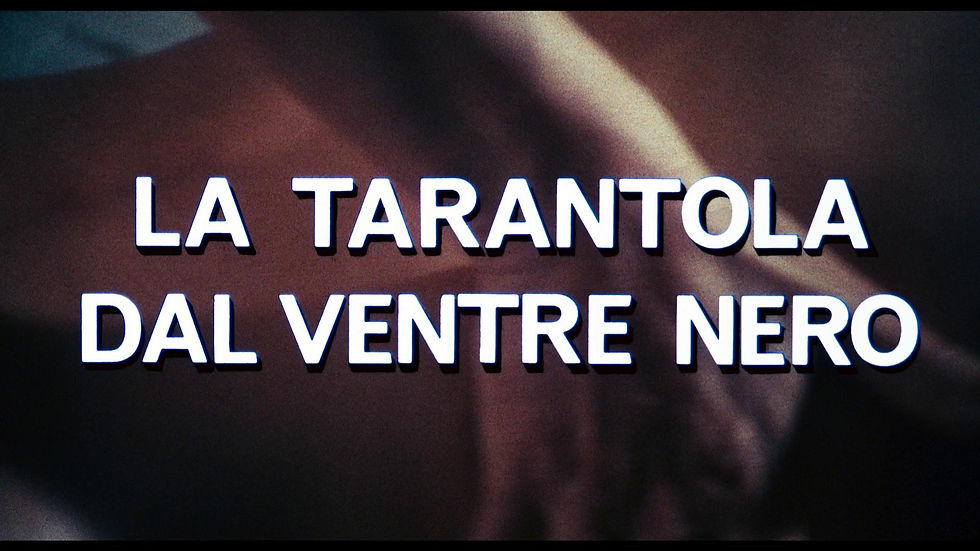
The images on this page are taken from Celluloid Dreams’ 4K restoration Blu-rays (1.37:1 and 1.85:1 versions) – NOT the 4K UHD – and sized for the page. Larger versions can be viewed by right/cmd-clicking each side of the sliders. Note that there will be some JPG compression.
It’s always interesting to see classic genre films revisited in a modern 4K release. A restoration like this can give viewers a chance to appreciate details in the cinematography, atmosphere, and production that may have been harder to notice in older formats. Reviews that discuss both the film itself and the quality of the new presentation are especially useful for collectors and fans of vintage genre cinema. For a completely different kind of nostalgic entertainment, play Vice City online offers a fun browser-based experience.
The review’s mix of giallo, detective drama, and dark humor sounds really interesting, especially for fans of older genre films. On the entertainment side, I’ve also been enjoying Subway Surfers Online during free time lately—it’s a fun, relaxing change of pace.