


Agitator Blu-ray Review

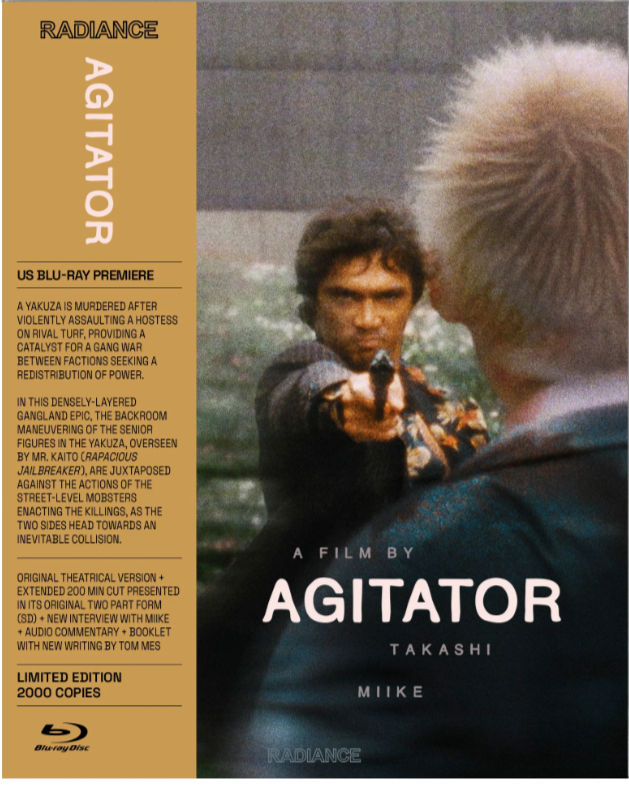
Radiance Films
Blu-ray Release: March 24, 2026
Video: 1.85:1/1080p/Color
Audio: Japanese LPCM 1.0 mono (theatrical cut); Japanese Dolby Digital 1.0 mono (extended cut, parts 1 & 2)
Subtitles: English
Run Time: 150:11 (theatrical cut), 102:58 (extended cut, part 1), 97:36 (extended cut, part 2)
Director: Takashi Miike
A yakuza (Takashi Miike) is murdered after violently assaulting a hostess on rival turf, providing the catalyst for a gang war between a number of factions seeking a redistribution of power. (From Radiance’s official synopsis)
Before he was a cult film superstar, Takashi Miike was a working-class filmmaker toiling away in the coal mines of Japanese V-cinema (the region’s equivalent to direct-to-video). His career exploded in the wake of his now classic, anti-romantic horror movie Audition, which premiered in October of 1999, but caught on, thanks to a wider Japanese release and multiple festival showings in 2000. Soon, American and European audiences were looking into Miike’s already extensive filmography, making surprise home video hits of forgotten V-cinema castoffs.

In 2001, Miike’s reputation began to peak. Already a veteran with several dozen movies under his belt, despite only being in the business for a decade, he produced six films that year (possibly seven, depending on your point-of-view), including breakout black comedies Visitor Q (Japanese: Q, Bijitā Kyū) and Happiness of the Katakuris (Japanese: Katakuri-ke no Kōfuku). But Miike’s bread & butter was still yakuza movies and he made three (or five – I’ll explain in a moment) that year, which represented the breadth of his work in the genre.
Only one of these films, the extraordinarily transgressive yakuza/horror hybrid Ichi the Killer (Japanese: Koroshiya 1, 2001) was an international hit. It was sort of a culmination of a hyperviolent, absurdist template that Miike had developed with Full Metal Gokudô (1997) and Dead or Alive (Japanese: Dead or Alive: Hanzaisha, 1999) – one that continued defining his career outside of Japan for several years, until things shifted during the mid-2000s and he redefined himself as the go-to guy for manga and video game adaptations, serious jidaigeki, and other effects-heavy efforts.
His other two 2001 gangster flicks were a boilerplate manga adaptation called Family (2001), which was followed directly by a STV sequel, Family 2 (neither of which I’ve seen), and the subject of this review, Agitator (Japanese: Araburu tamashii-tachi), which was made available in a standalone theatrical version and an extended, two-part home video version. Agitator and Ichi the Killer approach similar themes and basic plot elements from stylistically divergent angles, both of which are still emblematic of what Miike brought to the genre.

If Ichi the Killer represents the director at his most outré, then Agitator sees him fulfilling his role as the heir to Kinji Fukasaku’s brand of gritty gangster epic. Like Fukasaku, Miike utilizes handheld cameras and ragged cuts to convey the raw chaos of the underworld and contrasts the violence with long takes that play out in unusually framed static shots. But the connection between the filmmakers also applies to the metatext, in that the plot often pits street-level youth against the older gangsters leading the clans. In homage to Fukasaku and representing something of a generational handover, the older cast includes Toei ‘true account’ jitsuroku regulars Hiroki Matsukata, Shinzô Hotta, and Renji Ishibashi.
Shigenori Takechi’s screenplay (based in part on his own life experiences) is epic in terms of length and character count, but the actual scope is intimate, covering a relatively short period of time. The deliberate pacing and intimidating runtime will certainly test the patience of any viewer looking for the transgressive imp version of Miike that directed cartoonish romps, like Ichi the Killer, Visitor Q, and Happiness of the Katakuris, especially the extended cut. Fortunately, the film rewards patience with rich characterizations and a rollicking and brutal third act.
Bibliography:
Agitator: The Cinema of Takashi Miike by Tom Mes (FAB Press, 2004)
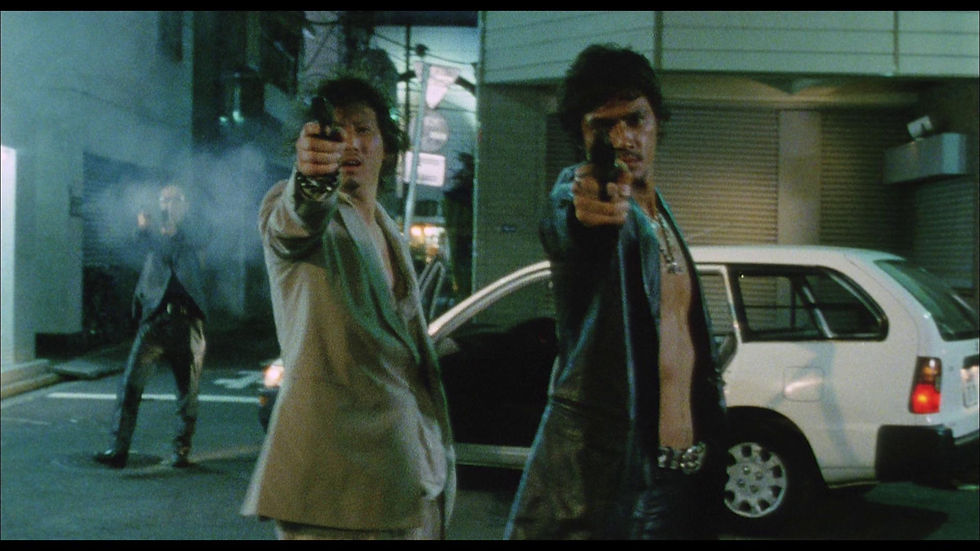
Video
As mentioned, there are two versions of Agitator available – the original theatrical release, which runs about 2 hours and 30 minutes, and a two-part extended edition, which runs a total of over 3 hours and 20 minutes. Neither version has ever been officially available on North American home video and the extended version was only made available outside of Japan last year, first by Umbrella in Australia. Radiance’s new collection includes the theatrical cut in full 1080p and the extended version in standard definition. IMDb specs claim that the film was shot on 35mm, but the grainy, soft appearance of this 1.85:1, 1080p transfer indicates 16mm (Tom Mes verifies during the commentary that there was a 35mm blow-up for theaters, but that video versions derive from the 16mm original).
Radiance doesn’t specify the source of their transfer, but I assume it is the same original V-cinema era scan, which would’ve been meant for VHS, DVD, and perhaps VCD. Supposed shortcomings are in the material, not the result of a problematic scan and restoration. The grain is compounded by choices cinematographer Kiyoshi Itō and Miike made in terms of exposure length and overall lighting. Bright light sources bloom and the general look is dark and dingy. There’s also a bit of print damage. That said, assuming that a crisper, more detailed transfer would go against Miike’s intentions, my only actual complaint pertains to occasionally fuzzy digital noise that looks more like upconvert artifacts than real film grain.

Note that there is one moment of graphic violence that is censored with blur effects. During the commentary, Mes says that this was a joke on Miike’s part and not actual censorship or an issue with this particular transfer. Also, there is no Daiei Presents intro graphic on the theatrical cut.
Audio
The theatrical cut is presented in DTS-HD Master Audio 1.0 mono and the extended cut is presented in lossy Dolby Digital mono. The mix is soft with minimal effects work and very little diegetic music, emphasizing level dialogue and basic ambience over bombastic sound. Gunshots are an exception, since they’re often used to shock the audience out of the violence. Composer Kōji Endō’s piano, violin, and accordion score, though rarely utilized, sounds nice and reinforces the film’s downbeat tone.

Extras
Commentary with Tom Mes (theatrical cut) – The author of both Agitator: The Cinema of Takashi Miike and its follow-up Re-Agitator: A Decade of Writing on Takashi Miike (FAB Press, 2013) explores Miike’s career and themes, the making of Agitator, the yakuza genre, other genre films from the era, the difficulty of preserving V-cinema movies on HD or 4K formats, and the careers of frequent Miike collaborators.
Takashi Miike interview (24:12, HD) – Recorded in 2025, this new discussion with the director covers the production of Agitator, the criminal history of screenwriter Shigenori Takechi, working with the cast, using a documentary style to both set the mood and save time, and the challenges of shooting on a small budget without the proper permission.
Theatrical trailer
The images on this page are taken from the BDs and sized for the page. Larger versions can be viewed by clicking the images. Note that there will be some JPG compression.
Great review—your take on Agitator captures that gritty, high-stakes yakuza energy really well, and it’s exactly the kind of write-up that keeps genre fans engaged. I liked how the blog balances the film’s intensity with its deeper themes of loyalty, betrayal, and power, which makes the discussion feel more thoughtful than a typical Blu-ray review. For readers looking for study support as well as entertainment, Online Android Assignment Help UK can be a useful resource when deadlines get tough and you still want clear, reliable guidance. Overall, this post is sharp, readable, and genuinely relatable for anyone who enjoys cult cinema and appreciates a review that goes beyond surface-level praise.
Film nights usually turn into something longer for me, especially when one title leads to another and I end up switching between genres. Somewhere in that flow, https://espn-plus.pissedconsumer.com/review.html gave me a more realistic sense of how the platform holds up outside of highlights and promotions. I care less about what is advertised and more about whether it feels worth opening again a few days later. That kind of consistency matters more than the initial impression when I decide what stays in my routine.